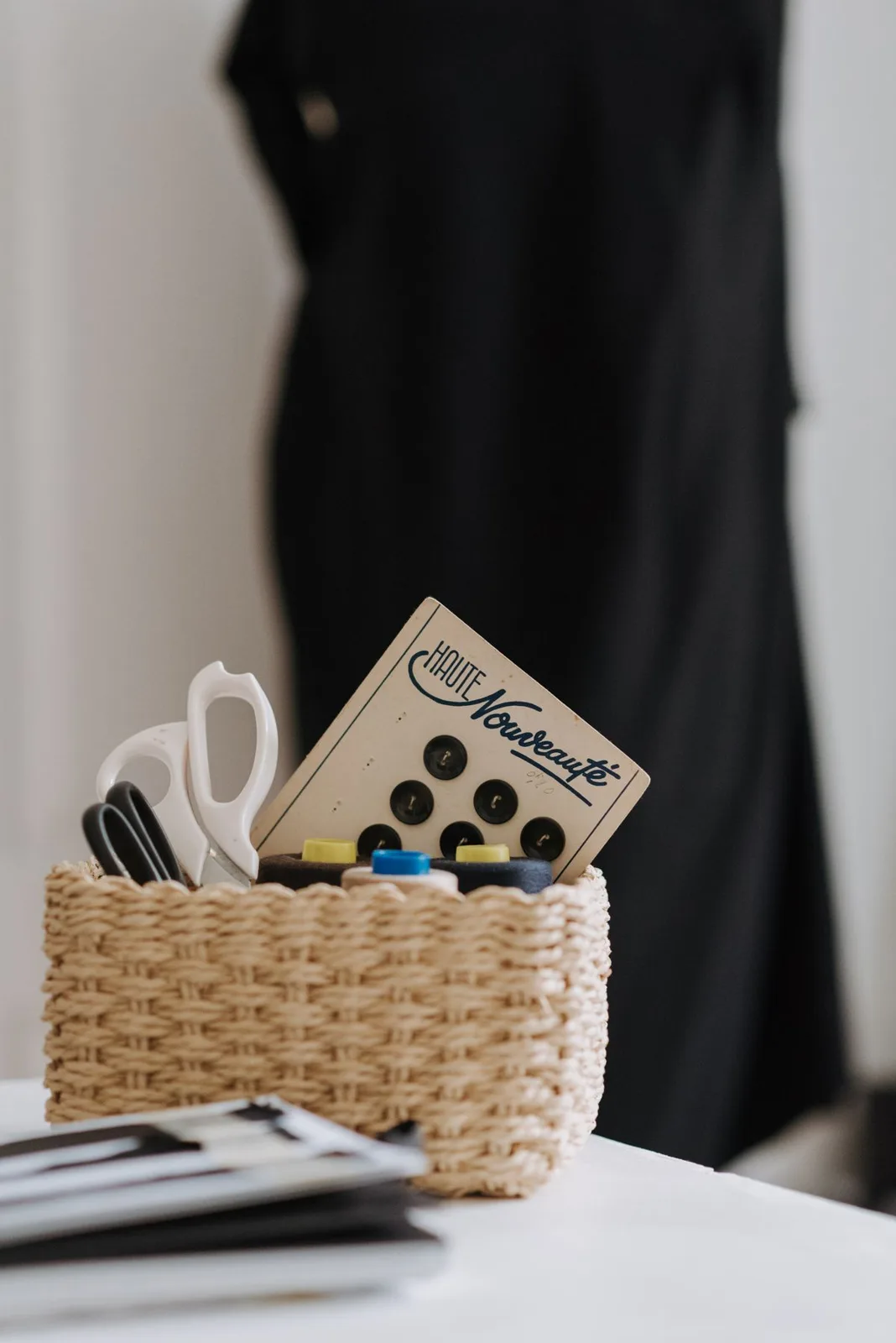
A loose button often goes unfixed because the needle, matching thread and garment never meet in the same place. A small repair basket can gather the essentials for ordinary fabric jobs without becoming a storage area for every broken object in the house.
Choose repairs you know how to make. The basket should help with familiar tasks; it does not make electrical, structural or specialised repairs suitable for a home experiment.
Define which jobs belong
Start with clothing and simple household textiles: a loose button, a small seam opening or a label that needs reattaching.
Put other damaged items somewhere appropriate for assessment. A broken toy may need the manufacturer's guidance or replacement rather than sewing supplies.
Keep the repair collection small enough to inspect. If a garment has waited for months, decide whether the repair is still useful before adding another item.
Gather a modest adult tool set
Use a secure container for needles, pins, scissors and small notions. Store it beyond younger children's access and control use according to each child's ability.
Include a few threads suited to the repairs you actually make. Add spare buttons only if they have an identifiable purpose.
Keep the basket closed when it is not in use. A convenient collection should not leave sharp tools loose where children can find them.
Let children help identify the problem
Show the actual fault and ask what they notice. An older child can compare a loose button with a secure one; a younger child can help find the garment awaiting attention.
Give a role that fits their ability, such as choosing between suitable thread colours or holding the folded item before an adult begins.
Do not hand over sharp tools simply because the activity is called a family repair. Supervision and the task itself need to match the child.
Finish one repair before opening several
Choose a well-lit work area and keep the tools contained. Follow familiar sewing methods or consult appropriate instructions for a technique you need to learn.
An adult can demonstrate slowly without turning the repair into a full lesson. A child may be interested for only a few moments before returning to play.
Check the finished work before the item returns to use. Remove loose threads and account for needles and pins immediately.
If the repair proves more complicated than expected, stop and decide the next sensible action. Leaving an uncertain fix in place can create more trouble than postponing the job.
Reset the basket with a clear next item
Return every tool to its secure container. Keep one short note with an unfinished garment describing what remains to do.
Remove items no longer worth repairing and follow appropriate routes for reuse or disposal. Avoid repeatedly storing them because the basket has room.
Let children see the repaired item back in ordinary use. The useful result is a familiar object working again and a small, controlled set of supplies ready for the next suitable job.
Make it work for your family. Keep the useful bits and change the rest.