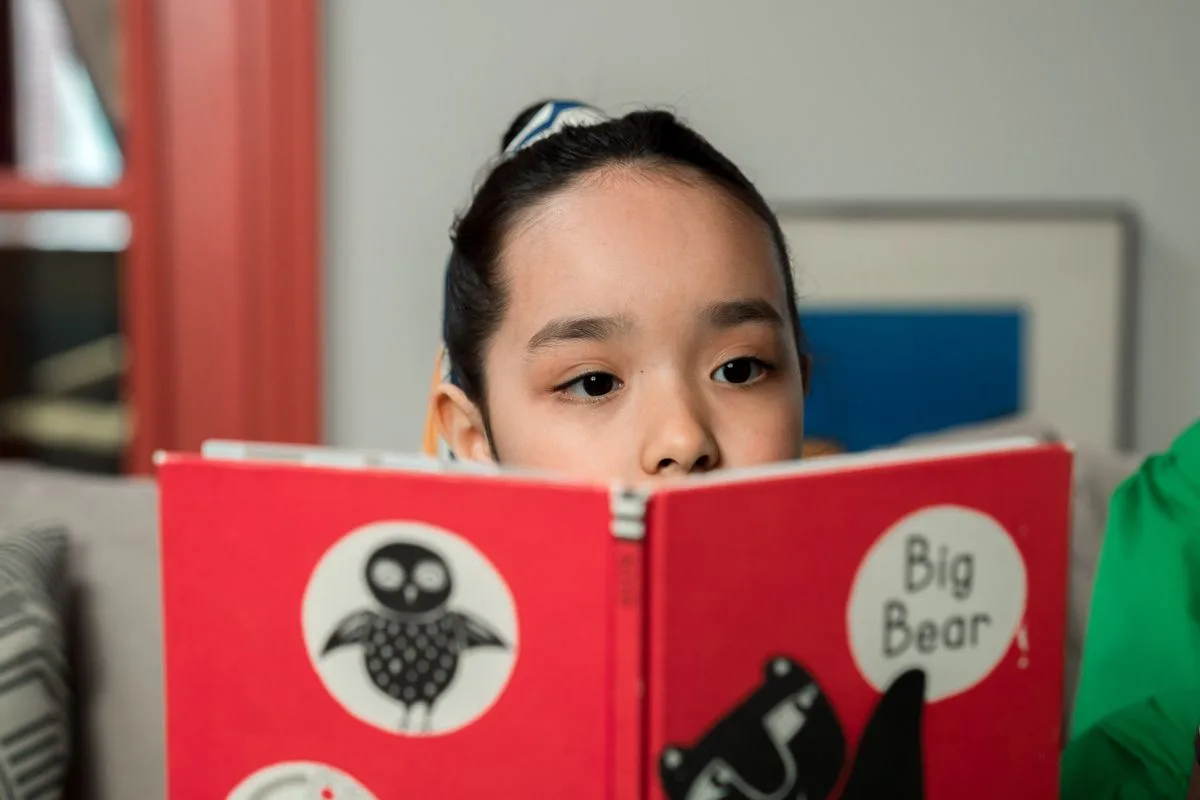
A reading corner does not need its own room or a miniature armchair. A familiar seat beside a small collection of books can provide somewhere to settle without taking over the shared living space.
Look for a place people already pause: one end of the sofa, a chair near a lamp or a floor cushion beside a low shelf. Start there before buying furniture or moving everything around.
Check the place at reading height
Sit where the child will sit. Notice whether there is enough light on the page, whether the seat is comfortable and whether someone opening a door will disturb the space.
Use existing lighting where possible. Keep lamps stable and cables away from walking routes. If the place only works when the whole family stays silent, choose another position.
A younger child may want room for an adult alongside them. Older children might prefer somewhere they can sit alone without feeling cut off from the household.
Keep the corner clear of routes that need to remain open. A small, useful area is better than an elaborate nook everybody has to step around.
Offer books that can be found again
Choose a modest selection with varied possibilities: picture books, a factual book, a comic or a familiar story. Include books the child already likes rather than treating the corner as a showcase of worthy reading.
Use a shallow basket or an existing shelf. Heavy books should not sit where they could fall onto someone reaching below them.
Make it possible to return a book without arranging the entire collection. Younger children can put books in a basket; older children may enjoy separating topics or arranging a few spines.
Keep borrowed books distinguishable. A small label on the basket or a separate space helps them reach the returns bag later without changing the reading corner into a library system.
Let the space support different kinds of reading
Looking at pictures, asking questions and returning to the same page can all belong here. Avoid requiring a child to finish a book before choosing another.
Offer shared reading without making every visit a lesson. If a child wants help with a word, respond to that specific question. If they are absorbed in the pictures, leave time for that too.
For siblings with different interests, keep a couple of options each can use. They do not need matching books or a rule that everyone reads simultaneously.
Keep the corner part of the room
Agree what happens when the seat is needed by somebody else. Books can return to the basket and a cushion can move; the corner does not have to remain permanently reserved.
Avoid adding toys, decorations and activity materials until the reading space becomes difficult to use. One cushion and a manageable book choice may be sufficient.
Refresh the selection when a child asks or the books stop being used. Include the child in deciding what stays.
At the end of the day, return loose books and check the seat is available. The corner succeeds when it makes reading easy to begin and equally easy to leave.
Make it work for your family. Keep the useful bits and change the rest.