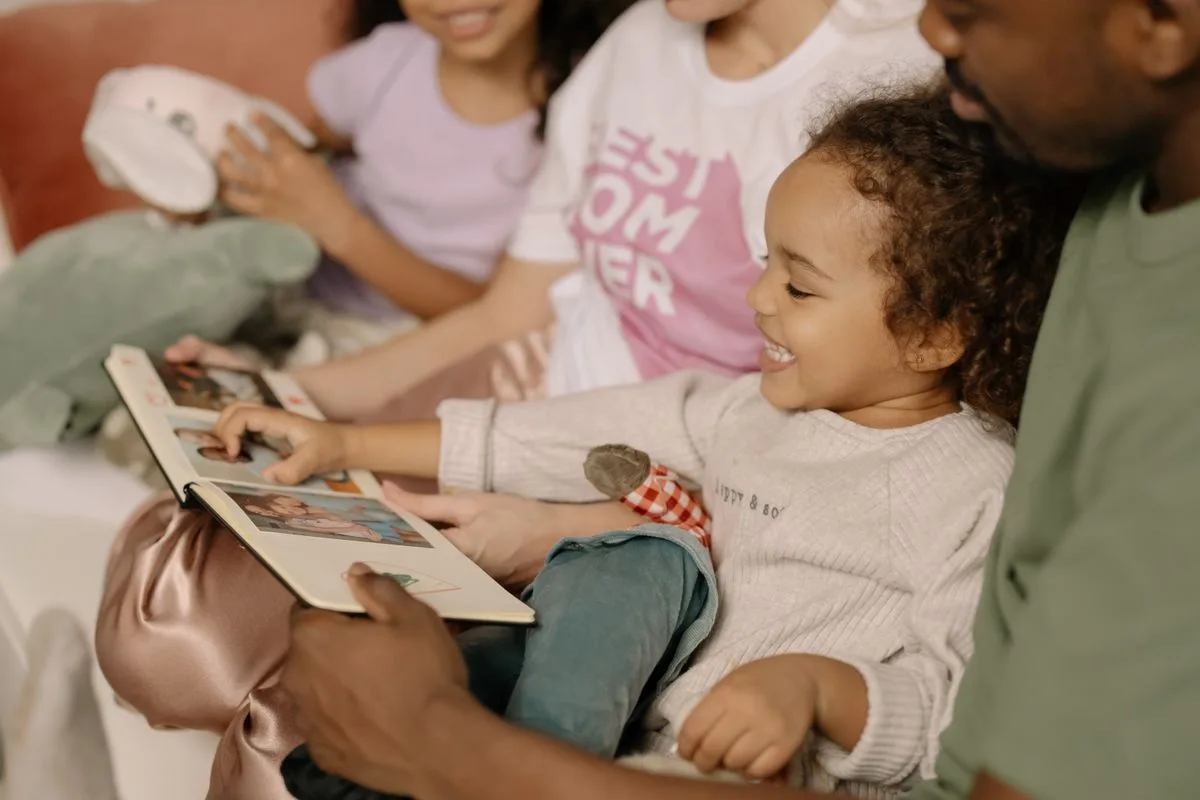
A family album can be a book children actually use, rather than a precious object brought out only by adults. Start with a small selection of photographs they will recognise: people, familiar places and ordinary moments.
Choose a simple album or make a short paper version. The important part is having pages that can be turned comfortably and a collection small enough to explore without losing the thread.
Choose a theme with a clear edge
One holiday, a year of family visits or “people we know” provides a manageable starting point. Avoid trying to represent the entire family history in the first album.
Ask an older child to help choose pictures. Younger children can point to favourites from a small selection laid out on a table.
Include ordinary photographs alongside celebrations. A picture of a familiar kitchen or a regular walk can prompt a different kind of conversation from a formal group portrait.
Check that the people pictured are comfortable with the intended use, particularly if the album will travel outside the household. Keep private details out of photographs you plan to share more widely.
Make the pages easy to understand
Use one or two clear images per page. Crowding lots of tiny photographs together can make faces and details hard to see.
Arrange the pictures in an order that suits the theme. A visit can follow the day's sequence; an album of relatives might group people by household.
Add short captions that help identify the image: a name, place or simple action. If the child's own comment captures the memory, ask whether they would like it included.
Avoid filling the page with adult explanations. Leave space for the child to tell the story differently each time.
Choose a format for repeated handling
Check the album's age suitability and condition. Pages should be secure, with no loose small parts accessible to children who might mouth them.
For a homemade version, use sturdy paper and a binding method an adult can assemble securely. Keep sharp fixings covered and choose materials appropriate to the child.
A small printed copy can be easier to replace than a collection of irreplaceable originals. Store original photographs separately if damage would be upsetting.
Place the album where children can request it or reach it safely. If an adult must lift it down, make that part of the ordinary invitation rather than treating the book as forbidden.
Let the album become a conversation
Follow what the child notices. They may be interested in somebody's hat rather than the event you expected them to remember.
Offer names and context without quizzing. “That is your cousin at the park” is more welcoming than repeatedly asking who everybody is.
For a younger child, a few pages may be enough. An older child might add an extra caption, draw a related place or suggest the next small album.
Repair a loose page promptly and keep the book within its original scope. A short album children know well can remain useful without continually growing.
Make it work for your family. Keep the useful bits and change the rest.