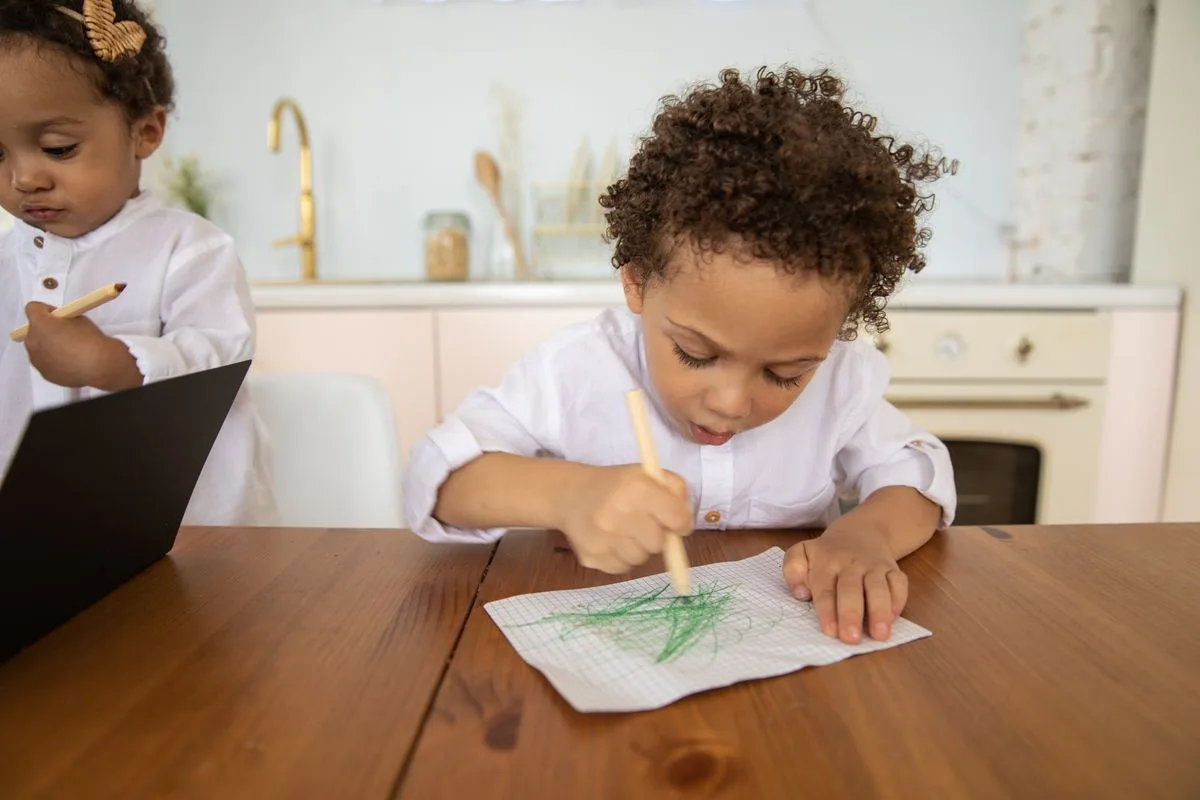
A dining table can be a useful place for drawing, building or puzzles during the day. The difficulty arrives when the activity has spread across the surface and somebody needs to serve a meal.
Plan the changeover before putting materials out. A portable collection and a place for unfinished work let the table serve both purposes without asking children to abandon every project abruptly.
Define the part of the table available for play
Clear one area and move food, drinks and paperwork away from it. Choose a protective mat suited to the surface and the activity.
Check how people will sit and move around the table. If several children need elbow room, keep the supply container at one end rather than letting it occupy everybody's working space.
For younger children, put out a small choice of age-appropriate materials. Older children can bring a more involved project if its pieces fit the available area and can be moved afterwards.
Keep tools or products needing adult supervision under appropriate adult control. Sharing a family table does not make every craft material suitable for independent use.
Put the activity in something that can travel
A tray, shallow box or folder can hold the current supplies. Use what you have, provided it is stable and practical to lift.
Choose activities with a manageable footprint. A small block scene, drawing session or card game may fit better than a project that needs to remain untouched for days.
Keep spare supplies elsewhere. Putting the whole craft cupboard on the table increases the amount everybody has to return before dinner.
Before starting, show children where the activity container will go later. It should have an actual shelf or resting place, not a promised home on another already crowded surface.
Give unfinished work its own option
A drawing can go flat into a folder. A small construction may fit on a tray that an adult can move carefully. Wet or fragile work needs a suitable resting place decided in advance.
Ask the child what must remain together. An older child might take a photograph of a temporary arrangement or write a note about the next step.
Be honest about what the household can preserve. If a large construction cannot stay intact, choose a smaller version or agree to rebuild it rather than promising unlimited table space.
Make the return to mealtime predictable
Give a brief warning before the table is needed. Name the actual jobs: supplies into the tray, work into its folder and scraps into the appropriate bin.
Let younger children take one clear job at a time. Older children can check their own materials and help move suitable items.
An adult should clean the table appropriately before food preparation or eating, following the materials' instructions where relevant.
After the meal, return the activity only if people still want it. The useful arrangement is a table that can change purpose without leaving either play or mealtime dependent on a complicated rescue operation.
Make it work for your family. Keep the useful bits and change the rest.