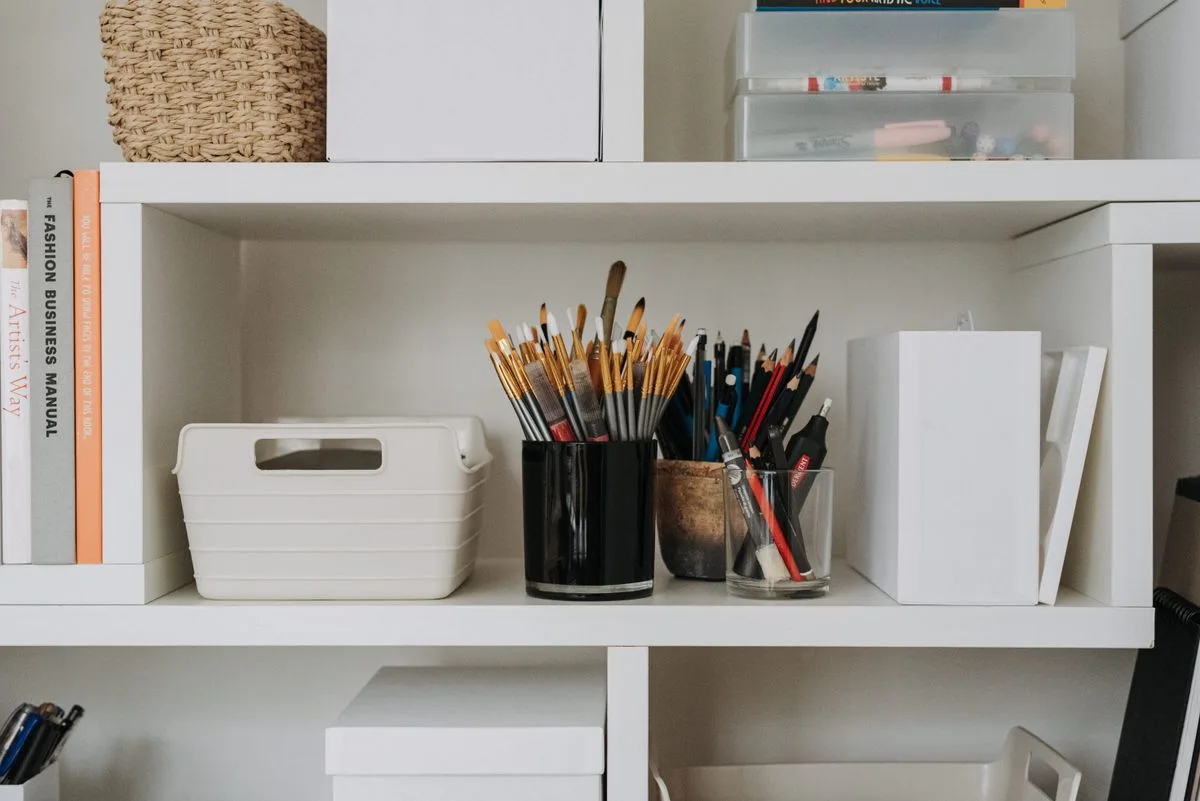
A craft cupboard can hold plenty of supplies and still make an activity difficult to start. The paper is behind the paint, the glue has dried up and every search ends with a pile on the floor.
Begin with the materials your household actually uses. You are making a working cupboard, not collecting enough supplies for every possible project.
Empty one shelf and check what belongs
Choose a shelf or drawer you can finish sorting in one session. Group similar materials together and check their condition.
Test pens on scrap paper, close glue properly and discard unusable supplies according to the product instructions and local waste guidance. Keep scissors and other tools where an adult can manage access appropriately.
Set aside items belonging elsewhere. An old receipt, sewing kit or spare charger does not need to stay simply because it arrived in the craft cupboard.
Avoid emptying the entire storage area unless you have the time and space to restore it. One completed shelf gives you a useful starting point.
Make a small everyday collection
Choose paper, a drawing material and perhaps one familiar sticking material suited to your children's ages. Keep these together in a container that can come to the table.
Younger children may need adult help carrying the supplies. Older children can help identify what they regularly use and which containers they can open independently.
Keep heavier or spillable materials securely stored. A reachable craft box does not mean every product belongs within unrestricted access.
Put less-used supplies behind or above the everyday collection, with a clear description on the front. Use existing boxes or trays before buying organisers.
Give saved packaging a definite boundary
Cardboard and clean packaging can be useful, but an unlimited collection soon hides the other materials. Choose one box and keep only pieces that fit comfortably.
Select items with an obvious use: flat card, a manageable box or plain paper. Remove staples or other unsuitable parts before offering anything to children.
When the box is full, use some contents or replace a less-useful piece. Do not create a second overflow container simply to avoid making a decision.
Ask an older child which shapes they want for a particular project. Collecting for a real idea keeps the selection more purposeful than saving everything indefinitely.
Design the cupboard for the finish too
Keep a small folder for unfinished work and a bag or tray for suitable scraps. These need a home separate from fresh materials.
Before an activity starts, decide where completed work can dry or rest. That avoids discovering at dinner time that every available surface is occupied.
At the end, return the everyday container, close products and clear the work surface. An adult can handle spills or tools requiring supervision.
Notice which items repeatedly fail to return. The container may be too full, the lid too awkward or the label unclear. Adjust that detail rather than adding more rules.
Stop organising when the materials are easy to find and put away. A practical cupboard does not need to look untouched.
Make it work for your family. Keep the useful bits and change the rest.