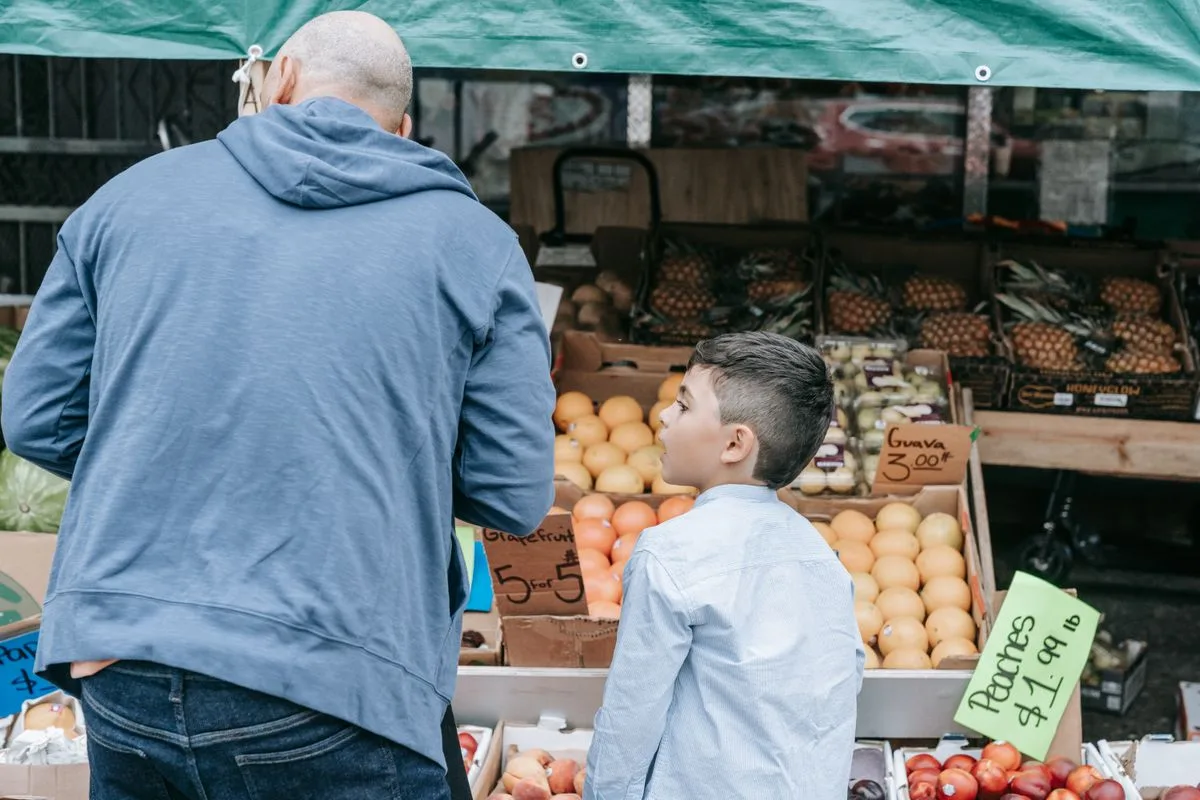
A market offers plenty to notice, but busy aisles and unfamiliar stalls can make an open-ended visit tiring. A child-sized list gives the outing a purpose: find one kind of fruit, look for bread and help choose something needed for the household.
Check the market's current dates and opening arrangements. Weather, season and trader attendance may affect what is there, so keep the list flexible.
Choose a genuinely small shopping job
Pick two or three things you actually intend to buy. Draw them for a younger child or write short labels for a reader. Include an alternative where it makes sense, such as apples or pears, rather than making the visit depend on one exact variety.
Explain what is being chosen and what is already decided. “You can choose between these two fruits” is clearer than offering unrestricted choice and then rejecting most suggestions.
Adults should keep responsibility for prices, payment and dietary suitability. An older child can read a displayed price or help compare portions, but need not manage the household's spending decision.
Look before joining a queue
From an appropriate place, see what a stall offers and whether it has what you need. Keep children close and avoid letting the group spread across a narrow aisle. Delivery vehicles and roads may be nearby even when the market itself feels pedestrian.
Ask before touching goods or taking a sample. Follow the trader's arrangements and check ingredients where necessary. A child who does not want to taste anything can still enjoy looking at the colours or packaging.
Let one child ask a simple question if they wish: “Which of these pears is ready to eat?” Choose a moment when the trader can respond, rather than turning a busy purchase into a long lesson.
Give waiting a small focus
While an adult buys, children can find a label beginning with a familiar letter or notice how goods are displayed. Keep the challenge within view rather than sending them to another stall.
For younger children, one observation may be enough. Older children might sketch the shape of a loaf later or remember three vegetables they did not recognise. There is no need to quiz them on every name.
If siblings disagree about a purchase, refer back to the choices offered. Take turns choosing across visits or choose one option that fits today's actual plan. A crowded stall is not a helpful setting for inventing a complicated fairness system.
Finish when the short list is done
Check the purchases and find a suitable place to pause if needed. Carry food according to its storage requirements and plan the journey home accordingly. Avoid adding many spontaneous stops once children have completed their part.
At home, let the child put an appropriate item in its usual place or show someone what they chose. Cross the list off together. The visit can become a repeatable errand because it has a clear size, rather than because it contains endless entertainment.
Make it work for your family. Keep the useful bits and change the rest.