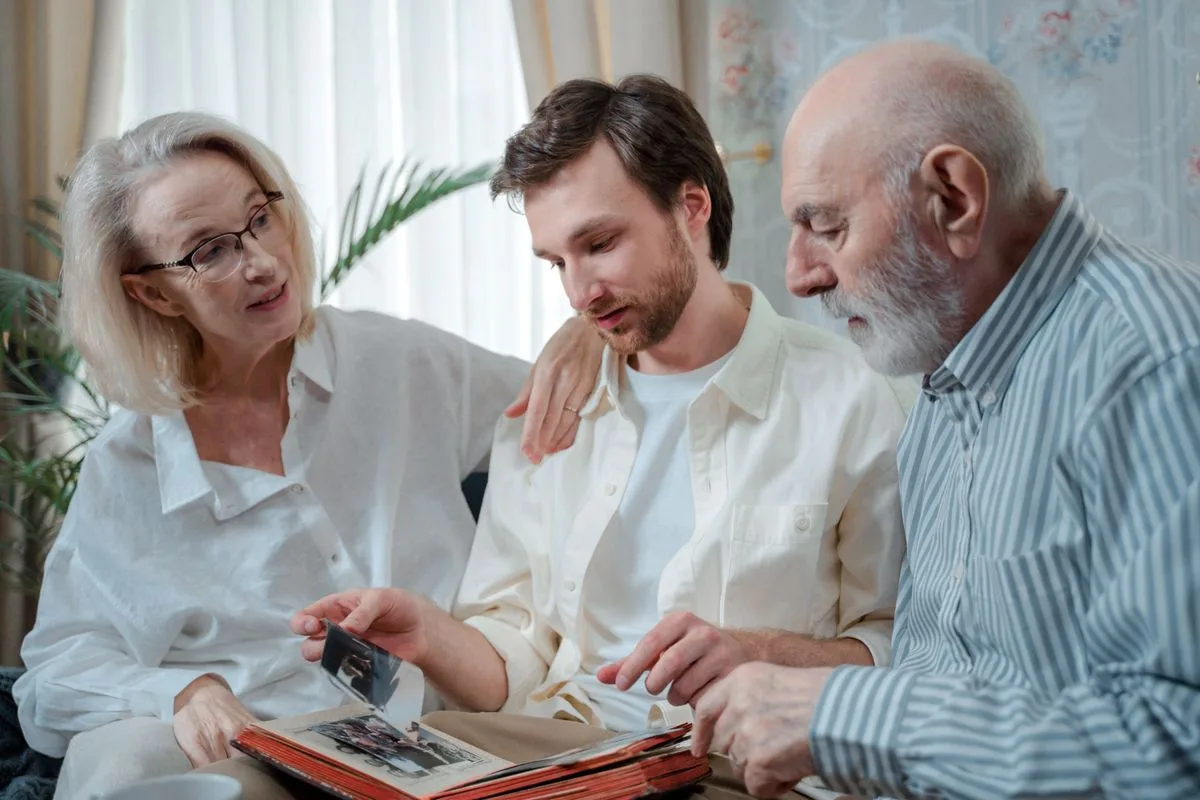
Family photographs can spark a guessing game about places, objects and moments. The game works best with familiar, comfortable pictures rather than obscure faces children feel expected to recognise. Choose images that the people involved would be happy to use, and keep private or sensitive photographs out of the activity.
Printed copies are convenient, but an adult can show a few selected images on a device without opening an entire photo library.
Select pictures with something to notice
Choose six or seven photographs with clear details: a red picnic blanket, a birthday cake, a familiar garden gate or someone's distinctive hat. Mix recent pictures with a few older ones that have an understandable connection to the child.
Avoid making knowledge of distant relatives a test of loyalty or memory. A child can enjoy the photograph even if they cannot name everybody. Check that copies are sturdy enough to handle, and keep irreplaceable originals in their album.
For a family with fewer shared photographs, use pictures of familiar places and belongings. The game does not depend on a large archive.
Begin with a visible-detail round
Show a picture and give one concrete clue: “I am thinking of something yellow.” Children point or describe what they think you mean. Once they understand, let them choose a detail for the adult to find.
A younger child can match the photograph to something in the room, such as the same chair or toy. An older child can give a clue about position: behind the table, beside the gate or partly hidden by a coat.
Keep turns short and accept alternative answers when the clue genuinely fits more than one object. That is a chance to make the next clue more specific, not a reason to declare somebody wrong.
Try a place or occasion mystery
For another round, describe a photograph before showing it. “We were outside, there was a blanket, and everybody had brought lunch.” Offer two possible pictures if the child needs a smaller choice.
Let children explain what helped them guess. They might remember the actual day, or simply notice clues in the picture. Both approaches belong in the game. Avoid correcting their remembered feelings because an adult recalls the occasion differently.
Notice when to change the picture
If a photograph brings up sadness or discomfort, put it aside without insisting on discussion. Choose another image or change activities. A family game does not need to cover every part of the family story.
Turn a favourite picture into a caption
Finish by letting each person choose an image they would like to look at longer. Write a short caption together, including only details you know. “Lunch in the garden” is more accurate than an uncertain date presented as fact.
Return photographs to their proper storage and close the selected images on the device. If children want to share a picture with somebody else, check with the relevant adult first. The enjoyable part can remain a small conversation at home.
Make it work for your family. Keep the useful bits and change the rest.