Rain at the window does not have to mean a whole afternoon of organised entertainment. A drawing table can offer somewhere to begin, leave and return to. The useful part is keeping the invitation small: a few sheets of paper, a handful of colours and enough clear space to use them.
You do not need to prepare a model for children to copy. A table that welcomes different ideas usually lasts longer than a project with one correct result. Choose washable, age-appropriate materials and stay alongside younger children.
Choose the space before the supplies
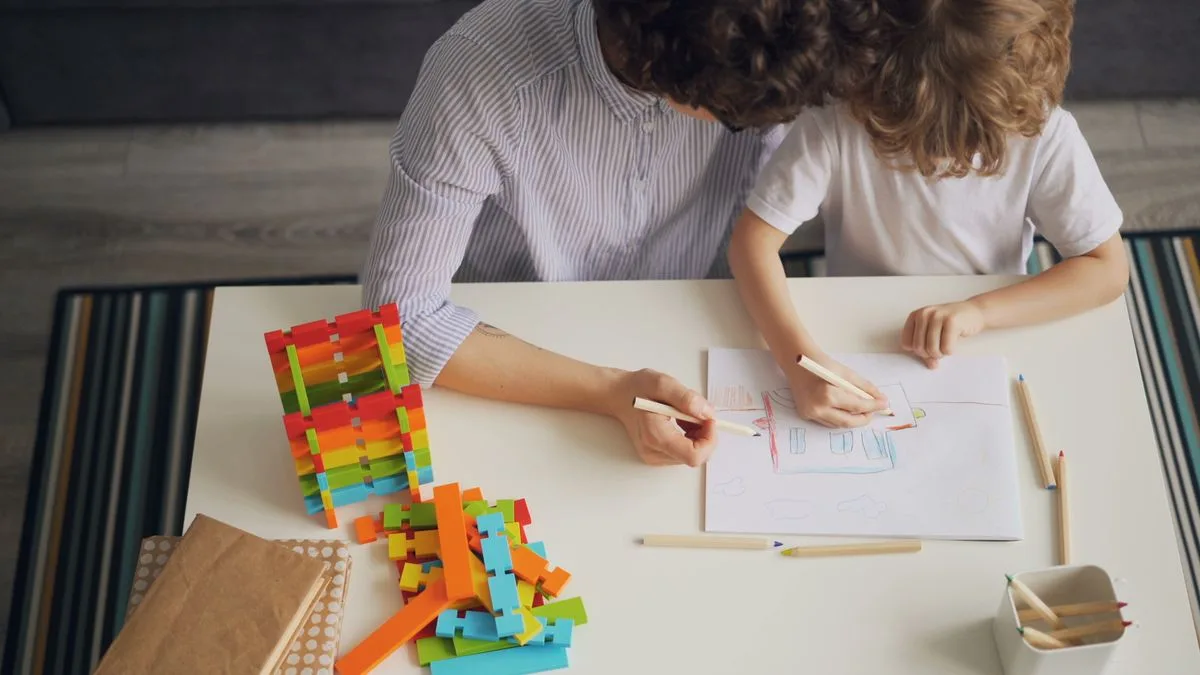
Use one end of the dining table rather than clearing the entire room. Move drinks, school letters and anything precious away from that end. A wipe-clean mat gives the activity a visible boundary; large scrap paper can also protect the surface, although it will not stop liquid soaking through.
Give each child room to rest their forearms. If elbows are already colliding, put a tray of materials between two separate places rather than asking everyone to share one crowded patch. Keep the route to the sink clear, and check the material's instructions before using it on furniture.
Put out a deliberately small choice
Start with plain paper, chunky crayons for younger children and coloured pencils for children who can use them comfortably. Put the colours in a shallow container so nobody needs to empty a deep pencil case to find blue. Keep spare paper nearby but outside the main working space.
A useful starting invitation is: “Shall we draw somewhere we would like to go?” One child might make a few marks for a swimming pool while another invents a detailed map. Both belong at the same table. If the question lands badly, drop it and let the materials be enough.
Avoid adding paint, glue and glitter simply because the cupboard contains them. Introduce another material only when someone has an idea that needs it. That keeps the set-up understandable and the clearing away proportionate.
Let different ages use the same idea
A younger child may enjoy making roads that an adult follows with a finger. An older child might add street names, a key or a story about the people who live there. Offer help with a specific obstacle, such as holding paper steady, rather than taking over the picture.
If one child asks what to draw, offer two concrete possibilities: a strange vehicle or a place for a favourite toy. If another wants silence, let the conversation stop. Shared time does not require everyone to work at the same pace or discuss every mark.
Give unfinished drawings a home
Place a flat folder or an empty shelf beside the activity. Children can put work there when they pause, leaving the table usable for someone else. Write a name on the back if they want you to, rather than assuming every drawing needs a label or display.
For a child who returns after lunch, the folder is a clear invitation to continue. For a child who has finished, it prevents the picture becoming another object that adults move from surface to surface.
Finish with three clear jobs
Give a little notice before the table is needed for a meal. Then name the actual jobs: colours into the container, drawings into the folder, loose scraps into the recycling where suitable. An adult can handle the final wipe and any materials that need closer supervision.
Keep one easy-to-reach set of drawing supplies together for next time. The success of the afternoon is not a stack of impressive pictures. It is having made room for an ordinary activity that feels simple enough to offer again.
Make it work for your family. Keep the useful bits and change the rest.