Pretend shops often work best when their stock is limited. A box full of unrelated toys can become a sorting task before a customer arrives. Choose a shop with three or four types of goods, such as a bookshop, toy shop or pretend greengrocer, and let children decide what it needs to open.
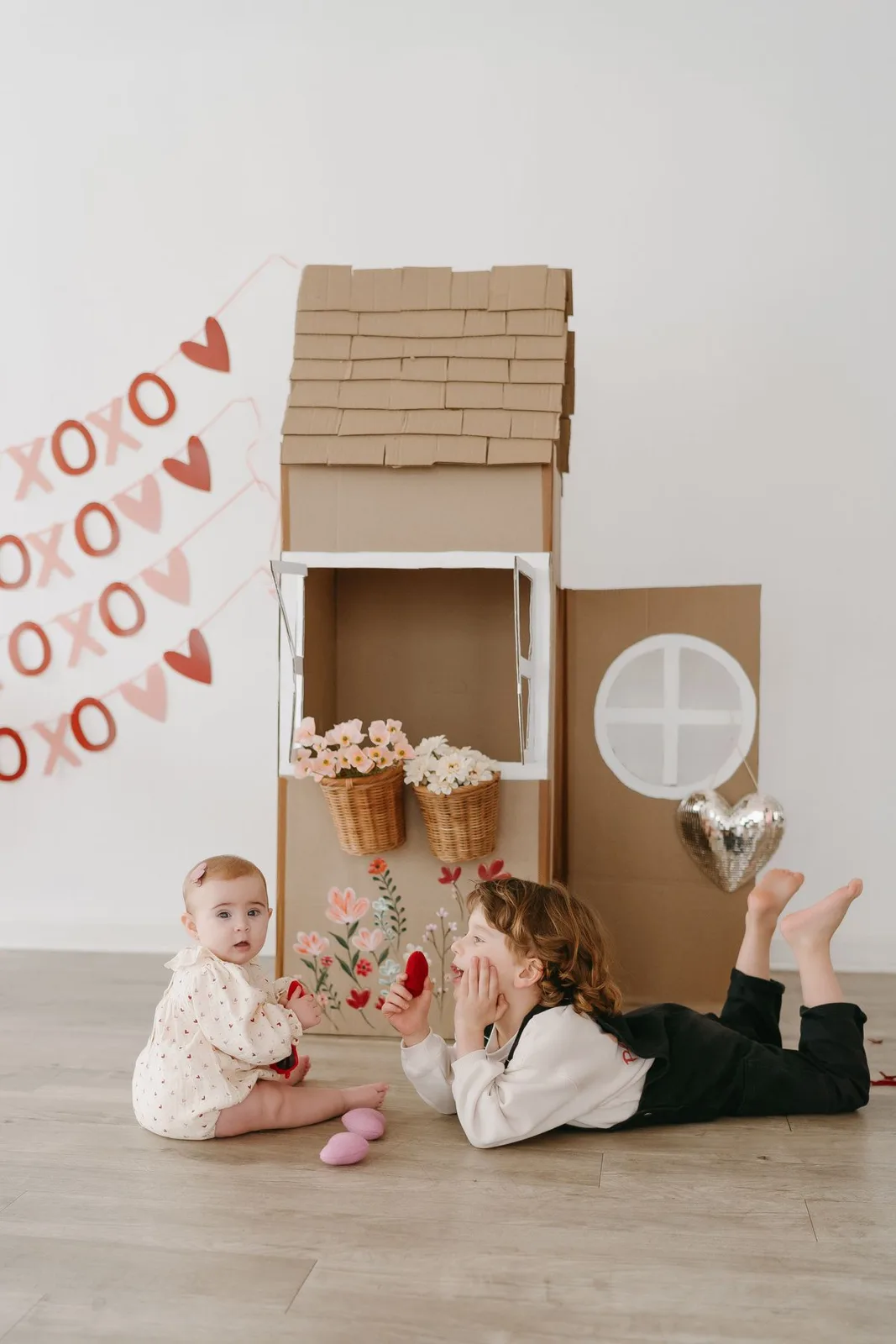
The cardboard box supplies a counter or display. It does not have to become a child-sized building.
Put the counter where play can happen
Choose a clean, sturdy box and remove staples, loose tape and packaging. An adult can trim flaps if they get in the way. Keep the box low enough for children to reach across without leaning their weight on it.
Place it on the floor or a stable table, leaving a route for customers. Avoid making a shop doorway that children must crawl through if the box is likely to collapse. A sign taped to the front can establish the shop just as clearly.
Use a flat basket beside the counter for stock. If each item has a visible place, children can see what is available and return it during closing time.
Choose goods and a simple way to pay
Select a handful of age-appropriate toy foods, books or large blocks representing parcels. Clean, empty food packaging can also work after checking for sharp edges and detachable parts. Keep real food separate unless an adult has deliberately planned a snack activity.
For younger children, paying can mean saying the price aloud and passing over a large paper card marked “paid”. Older children may want to write prices and make paper notes. Avoid real coins or other small payment pieces when toddlers share the activity.
Use simple prices if arithmetic is part of the interest. A shop where everything costs one, two or three pretend pounds makes change easier to explore. If counting interrupts the story, use an account or a stamp on a paper receipt instead.
Give customers something to ask
A useful customer request creates a reason to talk: “I need a present for someone who likes animals,” or “Have you got three things for a picnic?” The shopkeeper can suggest items instead of merely handing over whatever an adult names.
Children can swap roles after one purchase, or keep a favourite role while another becomes the delivery driver. Avoid assuming the oldest child must manage the till. Someone who prefers arranging shelves can be the stock organiser.
If there is a disagreement about ownership, use neutral household items rather than a treasured toy. The pretend shop should not require a child to lend something they are protecting.
Close with stock and signs together
Announce a final customer, then turn the sign to “closed”. Return ordinary toys to their homes and put receipts, signs and paper payment cards inside the box. Flatten it if the room needs to change back quickly.
Next time, change the customer problem before adding more equipment. A delivery arriving late or a request for a gift can refresh the same small shop without another afternoon of construction.
Make it work for your family. Keep the useful bits and change the rest.