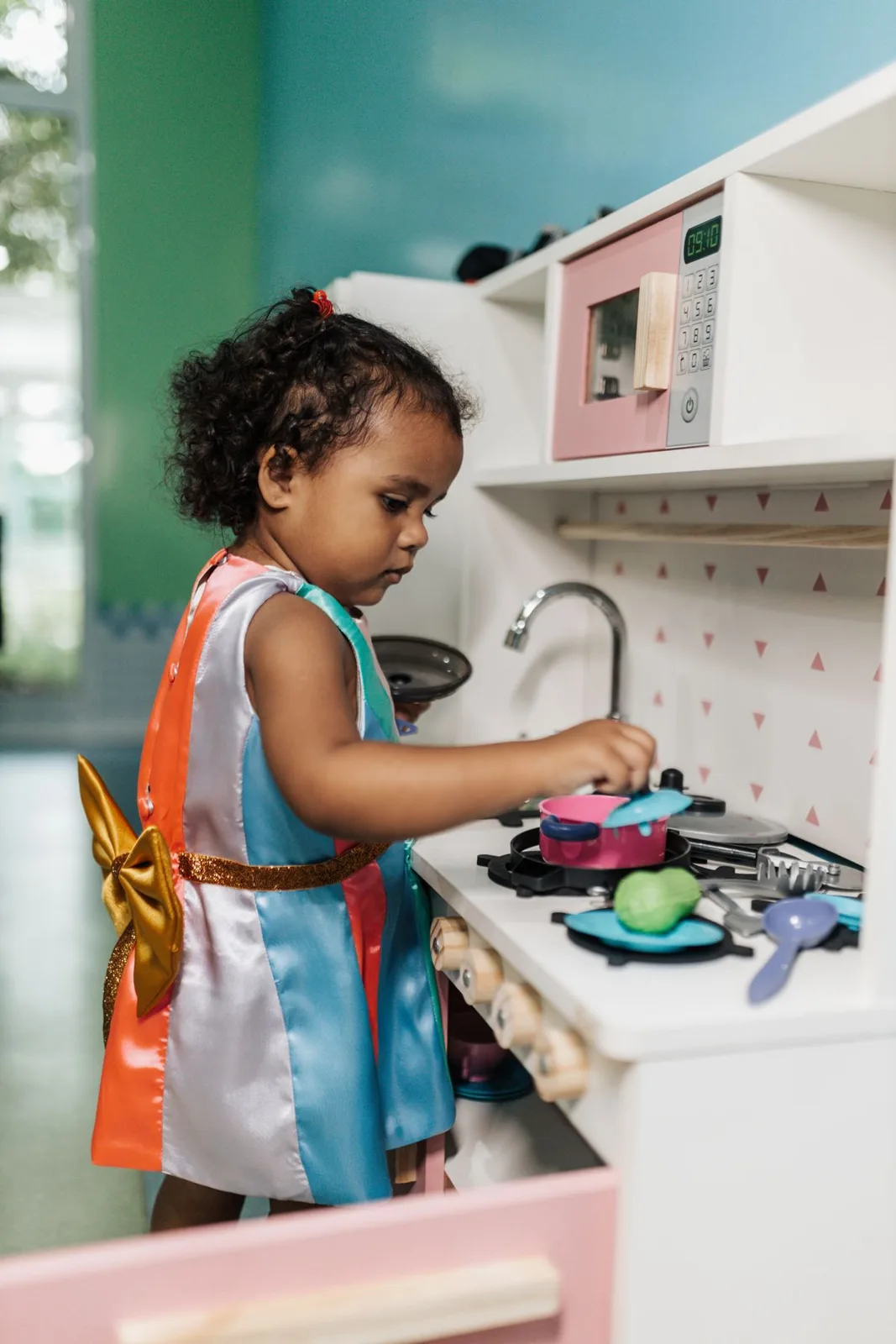
A pretend café can begin with one table, a short menu and a customer who wants something to eat. It does not require a full play kitchen. Children can invent dishes, take orders or arrange seats, and the café can close before the real dining table is needed.
Use pretend food or drawings for the game. Keep actual hot drinks, kitchen appliances and real food preparation separate from the café roles.
Write a menu people can use
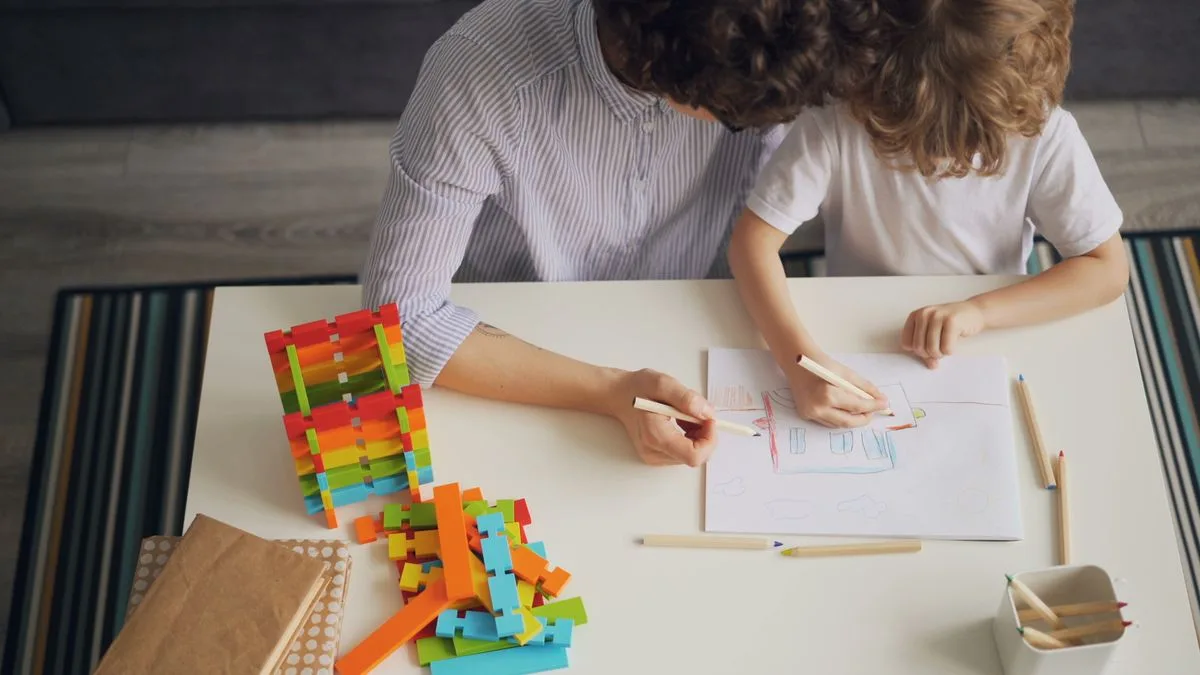
Fold a sheet of paper and add three choices. Draw each dish beside its name so a non-reader can order by pointing. A sandwich, a bowl of soup and a slice of imaginary cake are enough for an opening day.
Older children may want to add prices, but these are optional. Use simple amounts if counting is part of the interest. Younger children can choose colours, dictate dish names or make marks that stand for the café's special recipe.
Keep the menu tied to the available props. A large list creates pressure to invent or find objects every time someone orders. An “anything imaginary” special can cover an unexpected request.
Make room for an order and a reply
One person can greet the customer and ask what they would like. The customer points, names a dish or explains a preference. Give the server time to respond rather than supplying both sides of the conversation.
A scrap-paper order pad can help an older child remember two requests. A younger server may carry the menu back to the pretend kitchen instead. Neither needs perfect spelling or restaurant manners for the exchange to work.
If siblings want the same role, serve one customer per turn and swap. Someone who dislikes speaking can prepare plates or arrange the menu. Watching the café for a while is also a valid choice.
Try a gentle story problem: one dish has sold out, a guest needs an extra seat or a delivery arrives. Let children solve it using their own café rules.
Keep the props small and reusable
Choose a few age-appropriate toy dishes, large pretend foods or sturdy paper pictures. Empty household containers can work after an adult checks them. Avoid glass, sharp cutlery and tiny accessories around younger children.
A folded cloth can be a table covering, but leave space for it to lie without trailing into a walking route. Keep the serving area at a comfortable height so nobody needs to balance a tray above their reach.
If payment matters to the story, use large paper notes or simply announce that the bill is settled. Real coins are unnecessary. An older child can write a receipt as an extra activity rather than a compulsory step.
Tell the café when the final customer is arriving. After that order, turn the menu over to show “closed” and give each person one packing job.
Store menus and order pads together, return household items and put toy dishes in their normal place. The next café can use the same equipment with a different daily special, keeping preparation as small as the play space.
Make it work for your family. Keep the useful bits and change the rest.