A farm visit can involve waiting, watching and moving between very different spaces. Preparing children for those transitions is more useful than promising that they will feed or touch every animal. Choose a short plan and let the farm's current arrangements determine what is available.
Check booking requirements, opening hours, access and facilities through the venue itself. Ask any practical question that would change whether the visit works for your family.
Explain the visit without promising contact
Describe a few likely parts: looking at animals, following signs, washing hands and eating in the appropriate area. Explain that staff decide which interactions are allowed and that animals may be resting or unavailable.
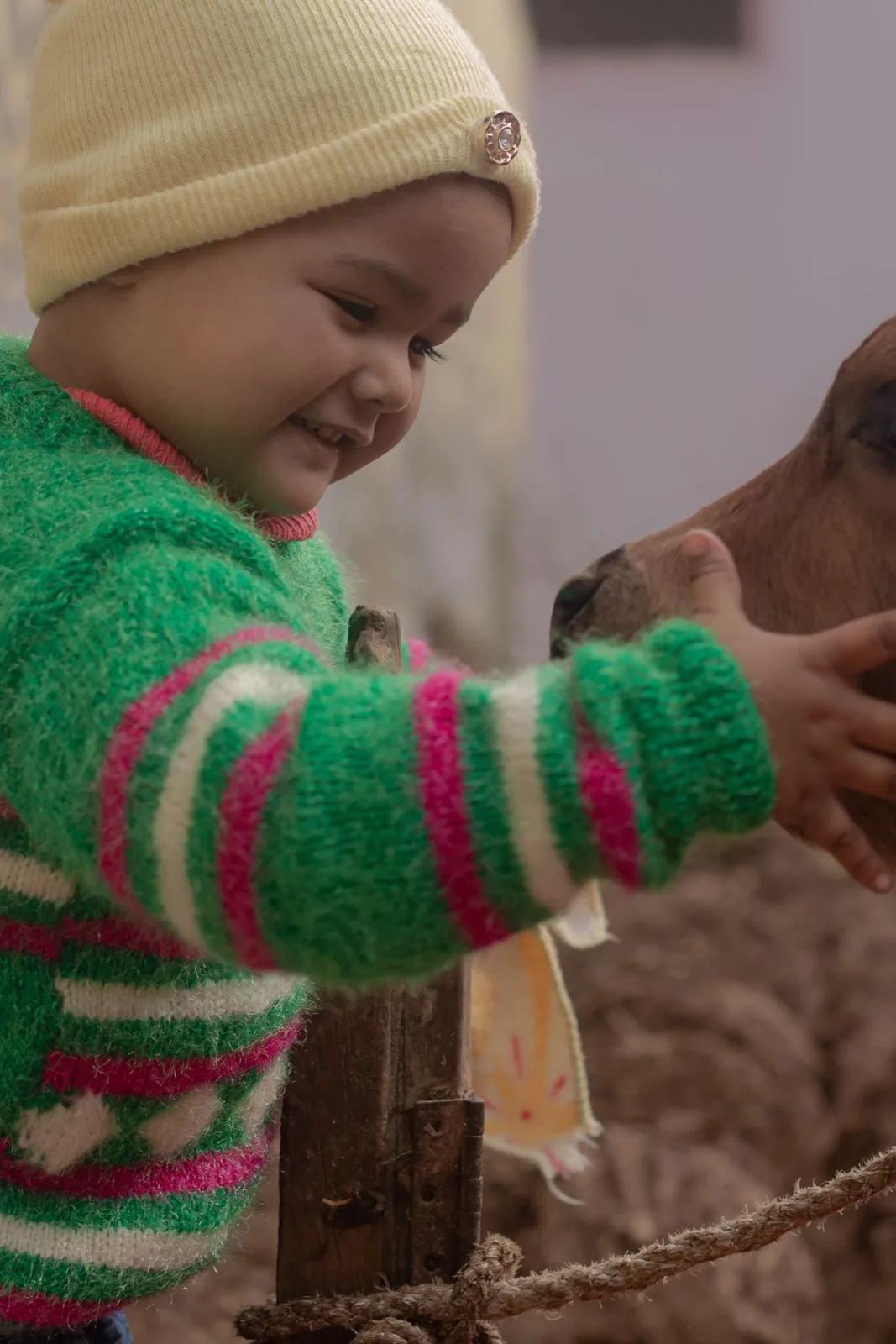
A younger child may enjoy watching from a little distance. Do not make touching an animal the measure of a successful visit. An older child could choose a question to ask staff at an appropriate moment, such as what a particular animal eats.
Choose a manageable section first. Moving through every enclosure may be less enjoyable than spending time at two or three that interest the children.
Make handwashing a definite part of the route
Read the UK Health Security Agency's farm-visit guidance before going. It advises washing with soap and running water after contact with animals or surfaces in their areas and before food or drink. Gels and wipes do not replace this washing.
Locate the proper handwashing facilities on arrival, and closely help children wash thoroughly. Plan the sequence as animal area, handwashing, then the designated eating area. Do not carry snacks around for children to nibble among the animals.
Explain that fingers stay out of mouths and faces stay away from animals. Follow all venue signs and staff instructions. Clean muddy footwear and pushchair wheels afterwards, then wash your hands.
Carry fewer loose objects
Keep toys and comfort items out of animal areas where practical, so they are not repeatedly dropped or handled during contact. Choose clothing and footwear suitable for the venue and conditions, with spare items stored cleanly.
Adults should manage food, bags and the group so that a child is not expected to remember every rule while excited. Agree explicitly who is supervising which child, especially when one wants to move on and another wants to stay.
Check accessibility and distances between facilities rather than assuming that a family attraction has one arrangement suitable for everyone.
Finish with watching and remembering
Give notice before the final animal area and leave time for handwashing before departure. Follow the same care with hygiene even if nobody stroked an animal; fences and other surfaces can also have been touched.
On the way home, ask about something observed: a movement, sound or feeding arrangement. Let the child describe it without supplying an invented story about the animal. At home, unpack used clothing and clean equipment as needed. Keep the official guidance available if you need information about illness following a farm visit.
Make it work for your family. Keep the useful bits and change the rest.