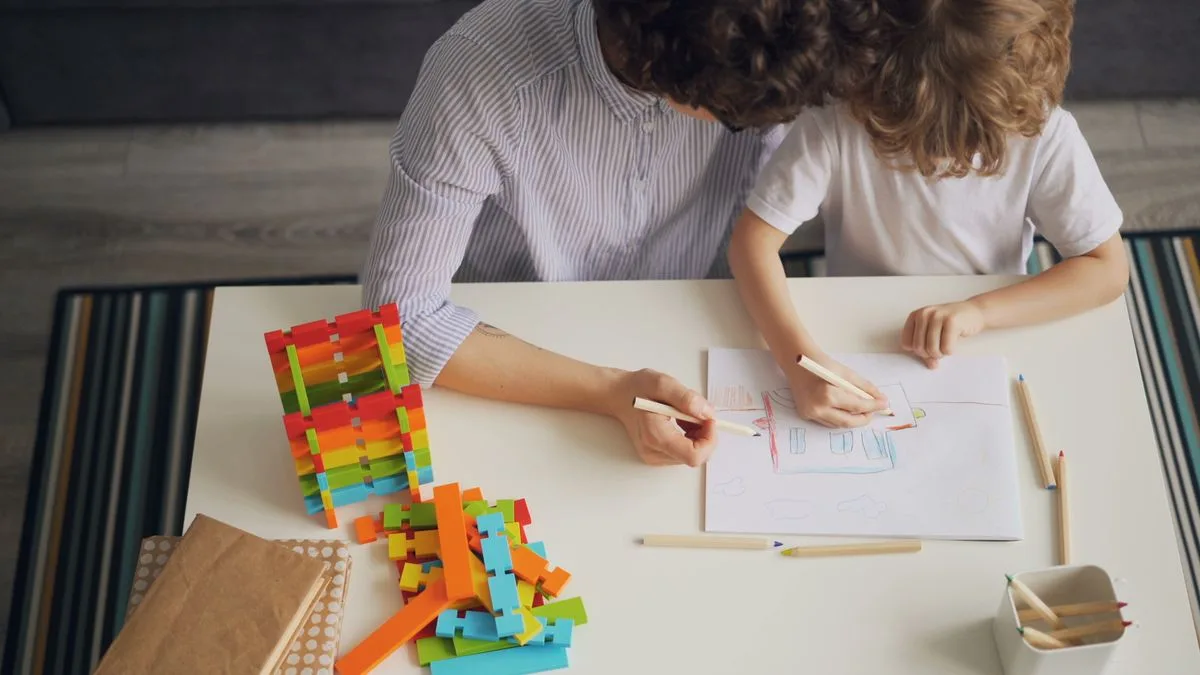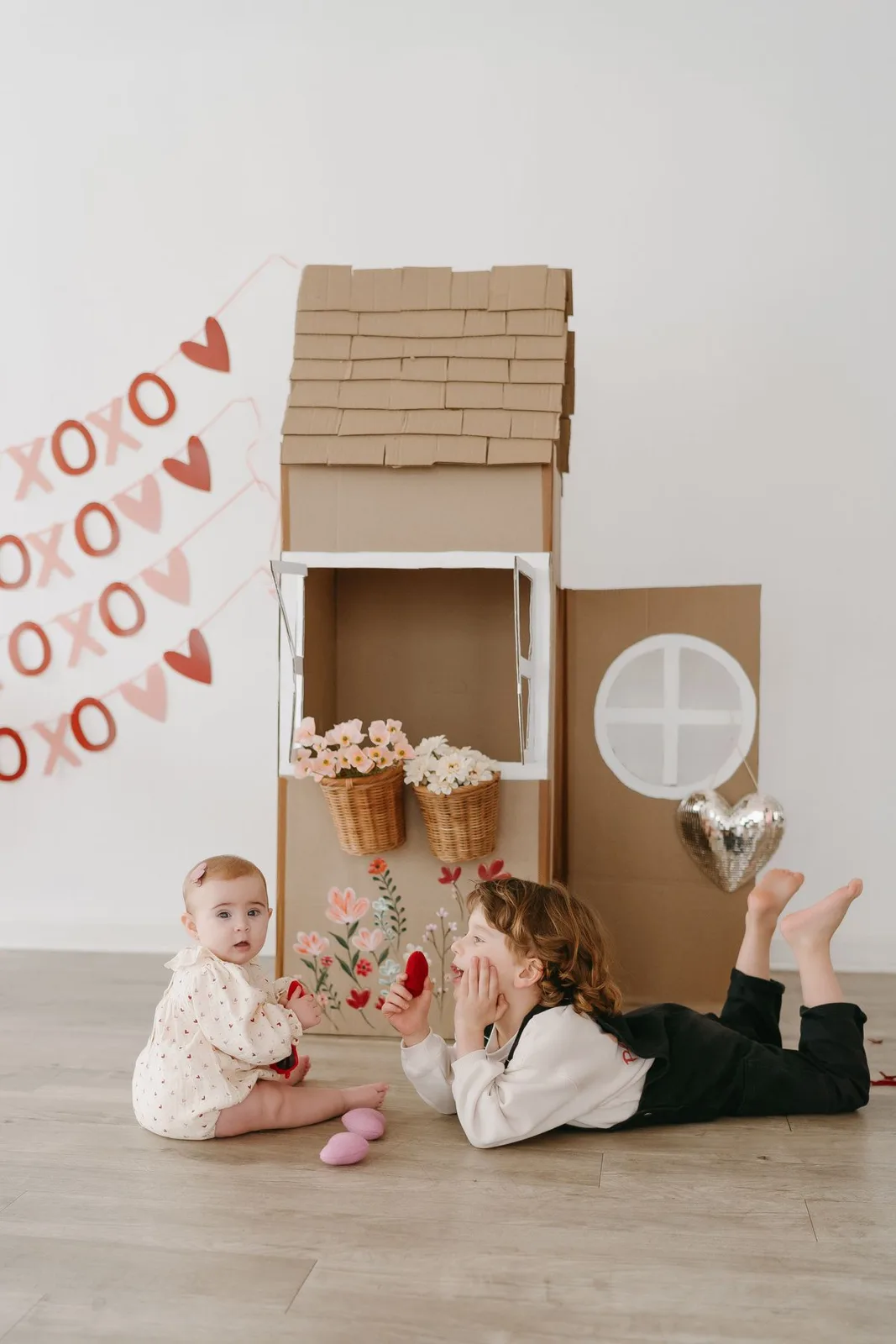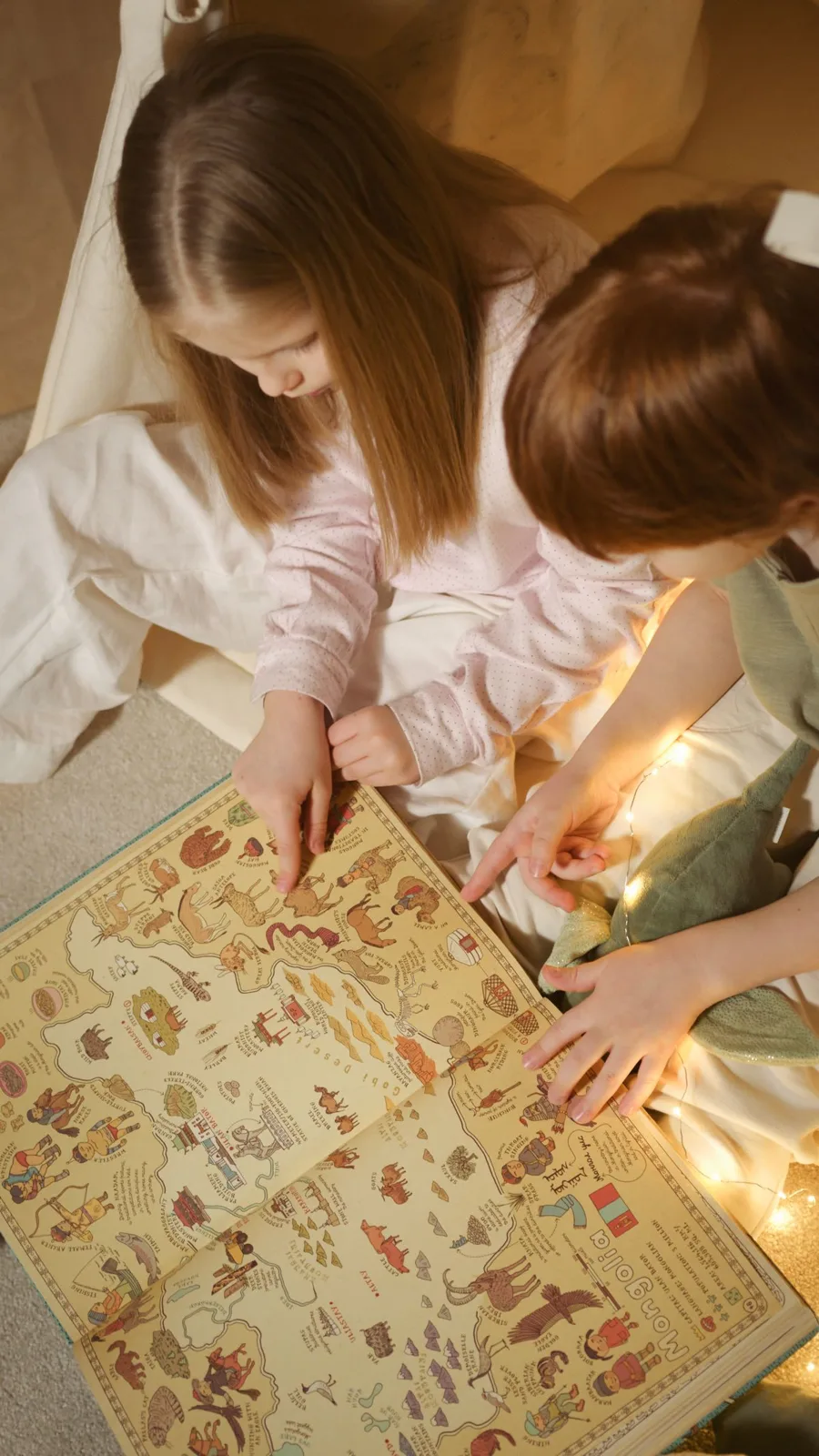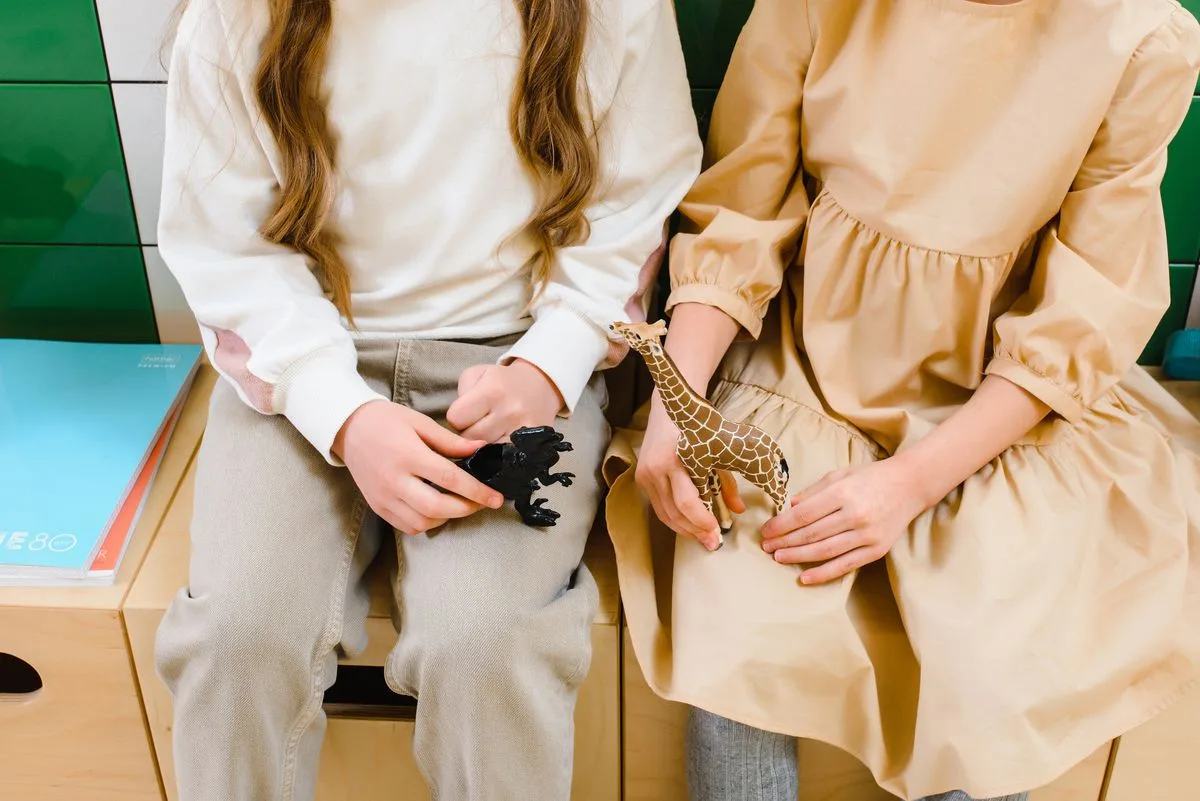
A small-world animal scene is an invitation to arrange and imagine. It does not need to resemble a realistic zoo or a complete landscape. A blue paper pond, a folded-card shelter and a few toy animals can give children enough places for a story to happen.
Choose animals suitable for the youngest child sharing the space. Keep the scene free of loose decorative pebbles, dried beans and other small pieces when young children may put things in their mouths.
Use a boundary that suits the room
A shallow tray, a sheet of card or one end of a low table can hold the scene. Check that children can reach the middle comfortably. If they need to climb or lean heavily on furniture, move the activity lower or make it smaller.
Start with five or six animals rather than tipping out a whole collection. Include more than one kind of animal if the child wants variety, or several of one kind if grouping is the interest. Leave unused toys in their normal storage so the scene remains easy to clear.
Give the animals somewhere to go
Make two or three obvious places using large, simple materials. Fold card into an open shelter, lay down paper for grass and make a pond from a blue cloth. Avoid real water unless you have deliberately planned a separate supervised water activity.
Children can decide which places belong to which animals. If they want an elephant living beside a penguin, ask about the imagined world rather than turning play into a correction. Factual habitat questions can be explored later in a suitable book if the child is interested.
A younger child may enjoy putting every animal under one roof. An older child can create paths, signs or separate areas, leaving the main layout accessible to everyone.
Offer a story only when it helps
If children begin arranging immediately, let them. Repeated lining up or grouping can be the entire activity. There is no need to insist on a rescue, an adventure or conversation between animals.
When someone asks what to do next, introduce one gentle event: a new animal arrives, a shelter needs enlarging or everybody is looking for shade. Give the problem and wait. Adults can play a supporting character without deciding the solution.
With siblings, agree which pieces may be moved freely and which arrangement somebody wants to finish first. Separate corners of the tray can become neighbouring places. Photographing a completed layout can make dismantling it easier, but ask before taking a picture.
Before packing away, invite each child to choose one detail they would like to use next time. Store dry paper pieces in an envelope if they are worth keeping. Return animals to their usual container rather than creating a second, forgotten collection.
If the scene stays out overnight, move it somewhere stable that does not block normal household use. A small world should fit into the home as comfortably as its animals fit into their shelters.
Make it work for your family. Keep the useful bits and change the rest.