A puppet show becomes much easier when the performance is smaller than the preparation. Two paper-bag characters and a story about a lost hat are enough. Children can invent voices, move scenery or simply watch; performing in front of the family does not have to be the goal.
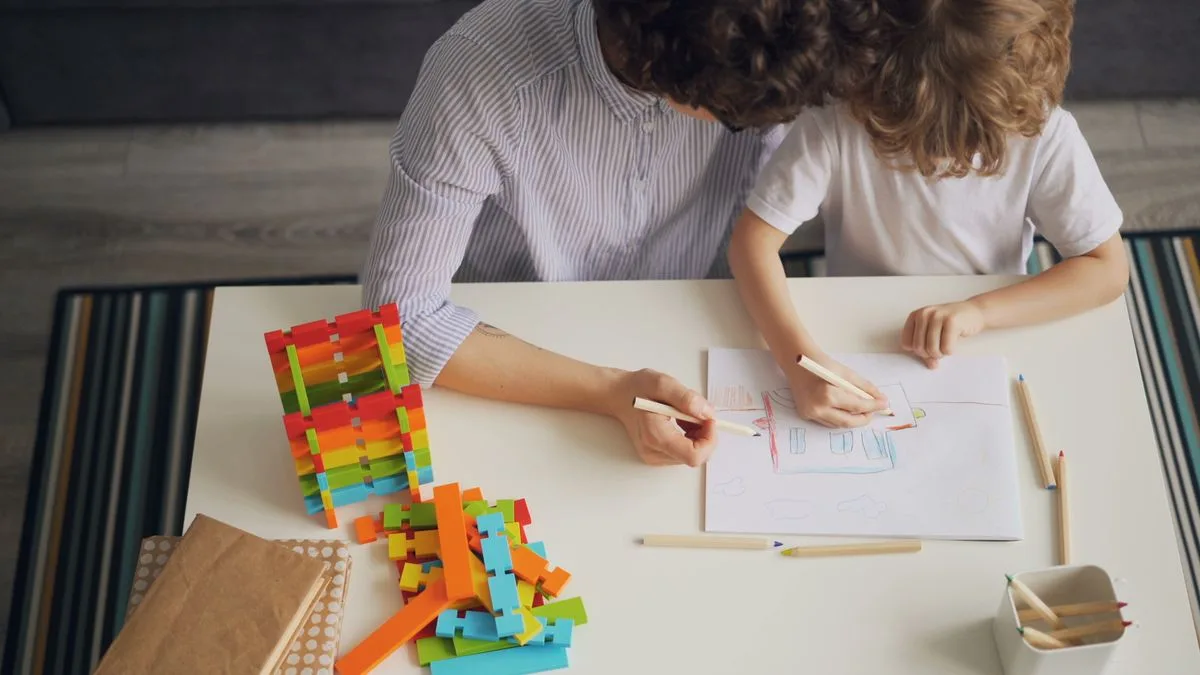
Gather plain paper bags that fit comfortably over a hand, crayons, paper scraps and a glue stick. Leave a clear patch of table for making and another for finished puppets.
Give each bag one recognisable feature
Check how the bag opens before drawing. Some have a folded base that can become a moving mouth; others work better as a simple upright character. Put a hand inside briefly, then lay the bag flat in the same orientation to decorate it.
Start with a face and one defining feature: a striped scarf, enormous eyebrows or a blue patch. Draw details rather than adding small detachable decorations, particularly when younger siblings share the room. Large paper ears can be glued on if children want more shape.
A child who dislikes drawing can choose colours while an adult follows their directions. Keep the character open-ended. A bag with a worried face might become a rabbit, a neighbour or somebody entirely invented.
Build a stage that does not need building
The back of a sofa or the edge of a low table can provide a stage. Check that children can use it comfortably without climbing or stretching. A seated performance with puppets above a tabletop may be easier than crouching behind furniture.
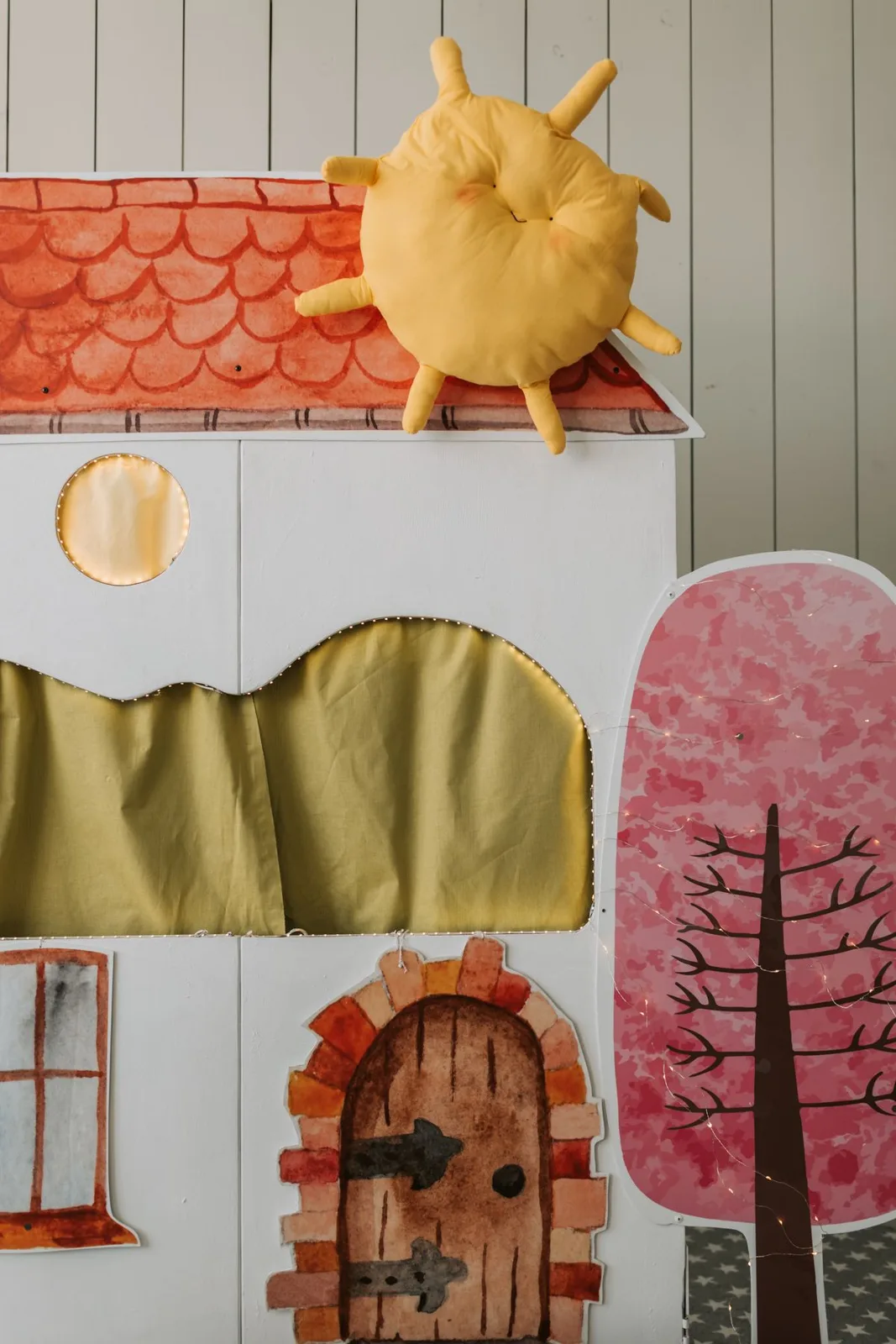
Avoid covering the whole area with a heavy blanket. A small piece of paper placed on the table can mark where the action happens. Leave room behind it for hands and bags to move freely.
Choose an audience position from which everyone can see. Test it with one puppet before arranging chairs or preparing scenery.
Start with a problem and an ending
Suggest a tiny story: somebody wants to find something, somebody else has an idea, and they try it together. Children can fill in the details. For example, a puppet loses its hat, asks at the pretend shop and discovers it on a chair.
Practise the beginning and ending rather than every sentence. Knowing how to finish can prevent a show drifting into endless arguments between characters. A simple bow or goodbye gives a clear closing point.
For siblings, agree who moves each puppet before starting. If both want the same character, alternate short scenes. An older child can narrate while a younger child makes the puppet wave; the narrator should leave gaps for those movements.
Someone can announce the title, hold a paper backdrop or collect puppets after the show. These jobs let a reluctant performer join without having a voice put on the spot. Watching is a valid choice too.
Ask whether children want a second performance before inviting more spectators or recording anything. Afterwards, store dry puppets flat in a large envelope. Write down one unfinished story idea if requested, then put the stage back into ordinary use.
Make it work for your family. Keep the useful bits and change the rest.