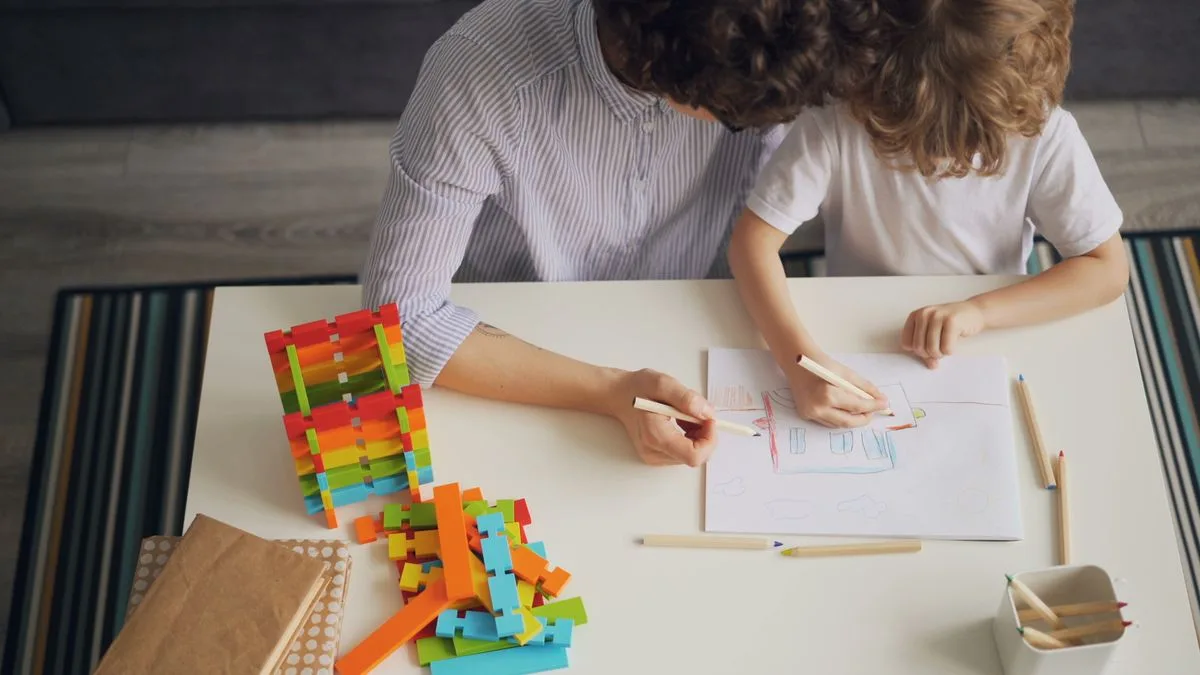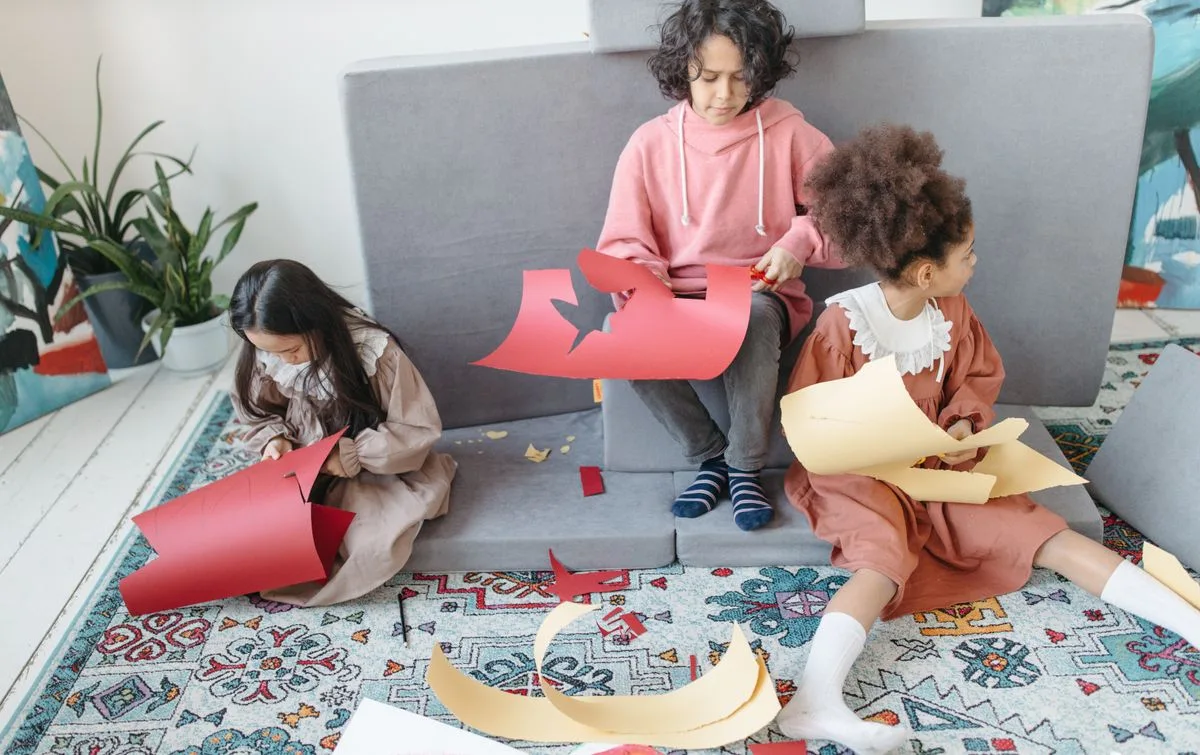
Yesterday's packaging can supply interesting letters, colours and textures for a collage. The useful part is selecting it before children sit down. A pile straight from the recycling bin is not a prepared craft activity, and some packaging is unsuitable to handle or glue.
Choose clean, dry paper and card. Leave food-soiled materials, sharp edges, plastic wrapping and anything with personal details out of the collection.
Sort a small palette
Pick a handful of pieces with contrasting colours or patterns. A cereal-box panel, a paper sleeve and a plain carton may already provide enough. An adult can open seams and remove staples or stubborn tape before the session.
Place the chosen materials in a shallow tray. Keep the rest of the recycling elsewhere so children can see their options. Give each person a base sheet of firm paper or card and an age-appropriate glue stick.
If printed branding distracts from the picture, use the plain reverse of some pieces. You can also treat letters and words as shapes rather than requiring children to make an advertising-style image.
Decide between tearing and cutting
Tearing creates soft, irregular edges and may suit children who do not yet use scissors comfortably. Try holding the paper near the tear and pulling slowly. Stiff card may need an adult to cut it into manageable shapes first.
Older children can cut strips, circles or windows with suitable scissors and support. Keep tools within the agreed working area. A child with hand fatigue can choose from large prepared pieces and direct how they are arranged.
Offer a bowl for unusable scraps. Keeping the workspace visible is easier than searching for a favourite piece beneath a spreading paper pile.
Arrange before gluing
Suggest a subject only if it helps: a strange garden, a colourful street or an imaginary animal. Children can also make a pattern with no recognisable objects. Put several pieces on the base before fixing anything, noticing where they overlap.
A younger child may want to glue each piece as soon as they pick it up. Give them one or two pieces at a time instead of insisting on a complete plan. An older child might build a background first and add details later.
Show how to apply glue on a protected scrap sheet, then move the piece onto the collage. Press from the centre towards the edges. Very thick or glossy materials may not stick well; choose a lighter alternative rather than adding endless glue.
Set the work aside somewhere it will not be stacked while damp. Ask the child whether they want to add a title or leave the image to speak for itself. The title can go on the back if the front is full.
Return reusable large scraps to one envelope and recycle the rest where suitable. Clean the table before the glue dries on it. Saving a small, useful selection makes another collage possible without turning packaging storage into a project of its own.
Make it work for your family. Keep the useful bits and change the rest.