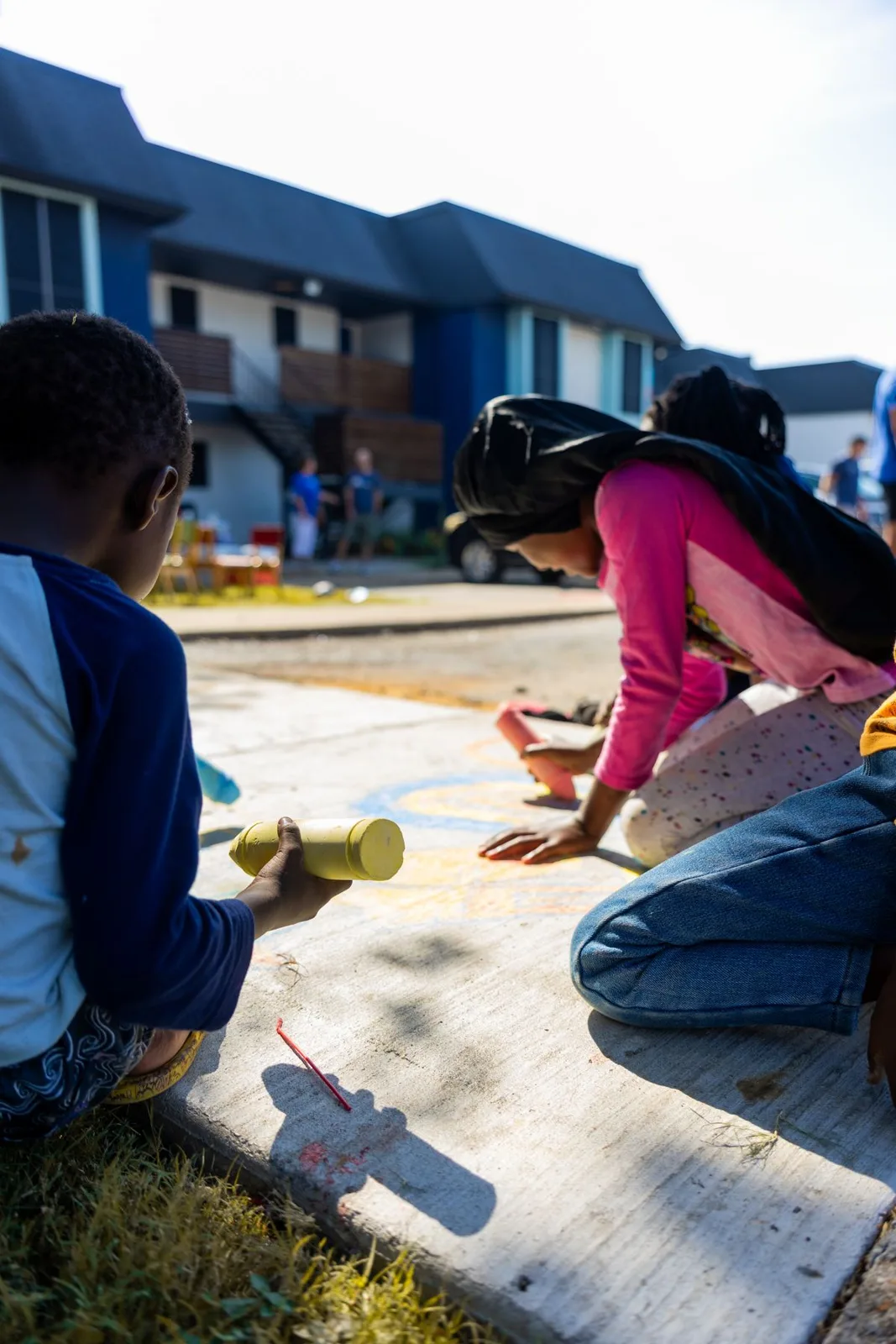
Chalk can mark out more than hopscotch. A few lines on a suitable paved area create routes, places to aim and pictures to complete together. Choose chalk intended for the surface and check permission before drawing on shared or public space.
Use a dry, clear area away from vehicles and walking hazards. Keep the play within an agreed boundary, and avoid drawing over steps or features that need to remain obvious.
Draw a trail with choices
Make a broad winding line and add two branches that meet again. Children can follow it on foot, move a toy along it or trace the route with a finger from a seated position. Keep curves gentle enough for the available space.
Add three stopping symbols: a sun for a stretch, a cloud for a quiet breath and a star for a wave. Choose movements that suit the children rather than requiring hopping or balancing. A younger child can copy an adult; an older child can design the next branch.
If chalk dust or the feel of chalk is unwelcome, offer a holder or let that child direct the drawing. Making decisions is a real part of designing the game.
Make a cooperative landing garden
Draw several large flowers or islands on the ground. From a nearby line, gently roll a soft ball towards them. Give each island a name rather than points, and see whether the group can visit all the places.
Pick a ball suitable for everyone present and keep the distance modest. Children can move closer or roll from sitting without needing a special rule. If the surface is rough, use a large soft beanbag appropriate to the children's ages and place it rather than throwing hard.
The shared challenge avoids somebody being eliminated after one difficult turn. An older child can keep a picture record of which islands have been reached.
Build a picture by taking turns
Draw a large empty shape, such as a garden outline or a pretend creature's body. Each person adds one detail before handing over. A garden can gain a pond, an enormous leaf and a house for imaginary insects.
Agree before beginning whether people may change somebody else's marks. Leaving existing drawings alone usually reduces arguments. If children want completely different scenes, divide the space into neighbouring pictures and connect them with a path.
A limited palette is enough. Choosing where a line goes can be more interesting than hunting for a particular missing colour.
Leave the space usable
Finish with a short walk around the drawings. Ask which game children would like to keep for another visit, and photograph it if they want a record. Put chalk back in a dry container and remove balls or other equipment.
Follow the surface owner's expectations for cleaning. Test any washing method on a small area rather than assuming every chalk disappears equally easily. When the drawings fade, the same space can host a different trail or a fresh shared picture.
Make it work for your family. Keep the useful bits and change the rest.