The gap before dinner is an awkward time for a large activity. A game that needs no pieces and has a clear final turn can give children something to do without covering the table you are about to use. Choose one from the ideas below, and keep the cooking area separate from play.
Five minutes is an approximate window, not a challenge to complete every game. An adult who is handling hot pans should not also be expected to supervise a movement game.
Try a detective round from the table
Choose an ordinary object that everybody can see. Give three clues, one at a time: it is round, it is on the wall, it has numbers. Children can guess after each clue. When someone identifies the clock, let them choose the next object if they want to.
Keep the object in the agreed area so the game does not become a house-wide search. For younger children, offer a choice between two visible things. For older children, begin with a clue about use rather than colour: “It helps us know when to leave.”
If several children shout guesses together, give each one a turn to ask a yes-or-no question. Stop after one full round rather than choosing a winner.
Play the invisible shopping basket
Say, “In my basket there is a pear.” The next person repeats the pear and adds an item. Keep the list short enough that everybody can stay involved. If remembering becomes frustrating, make a shared basket: anyone may offer a reminder.
Try a theme such as things for a picnic or objects that are blue. Do not combine themes and alphabetical order unless the children actively want the extra rule. A child who is learning English can point to an object or use a word from another language, with an adult helping the group understand.
End by pretending to unpack the basket together. That supplies a natural final turn whenever dinner is nearly ready.
Use tiny movements in a clear space
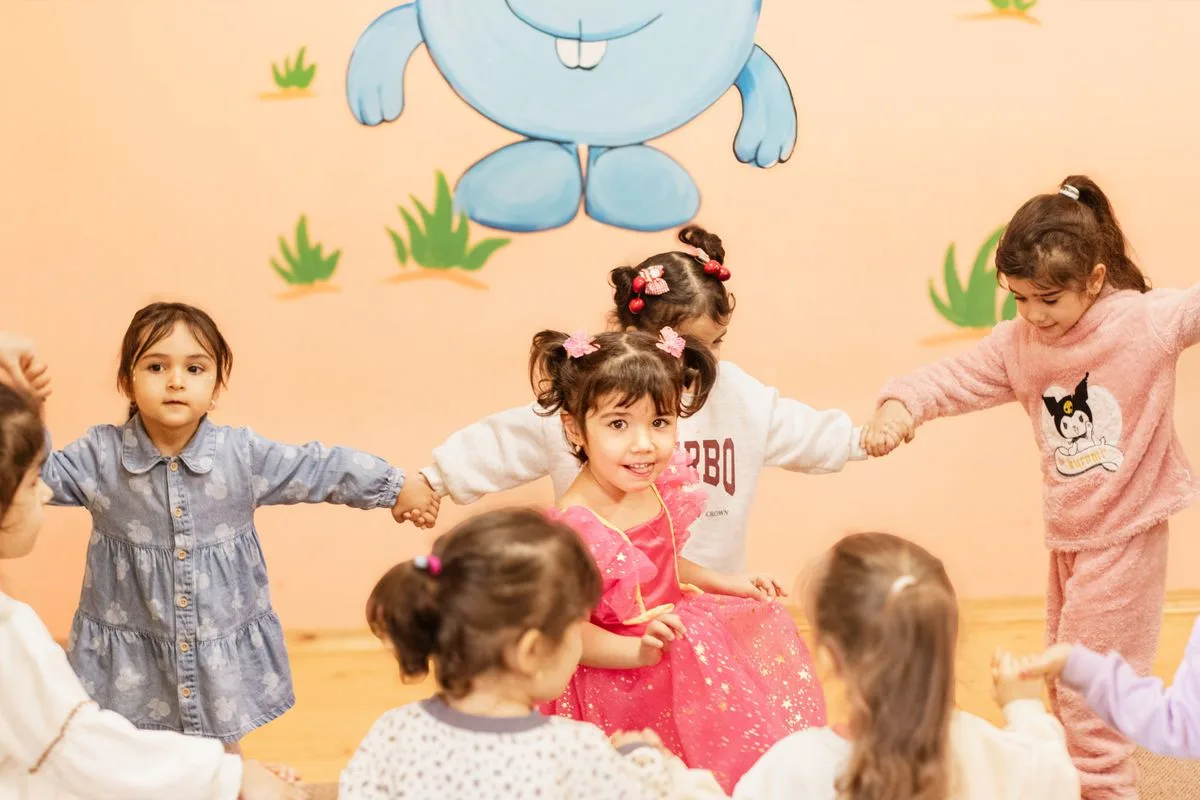
If another adult can join the children away from the cooker, try “copy my hands”. One person makes a slow hand pattern, such as clap, tap knees, palms up, and the others copy. Start with two movements before adding another.
Keep everyone seated or standing in their own space. There is no need for running, jumping or elimination. A child with limited movement can lead using a comfortable gesture, sound or facial expression instead.
Switch leaders after two patterns. Repeating one child's sequence gives them a visible turn without making them perform for a long time.
Make the stop part of the invitation
Before starting, explain that the game ends when dinner is ready, even if it has been brief. Give a final-round signal: one last object, one last basket item or one last pattern. Children then have something specific to finish.
Keep favourite games on a short note inside a cupboard if remembering ideas is difficult at that hour. The most useful pre-dinner game is one the household can begin quickly and leave without a second clean-up.
Make it work for your family. Keep the useful bits and change the rest.