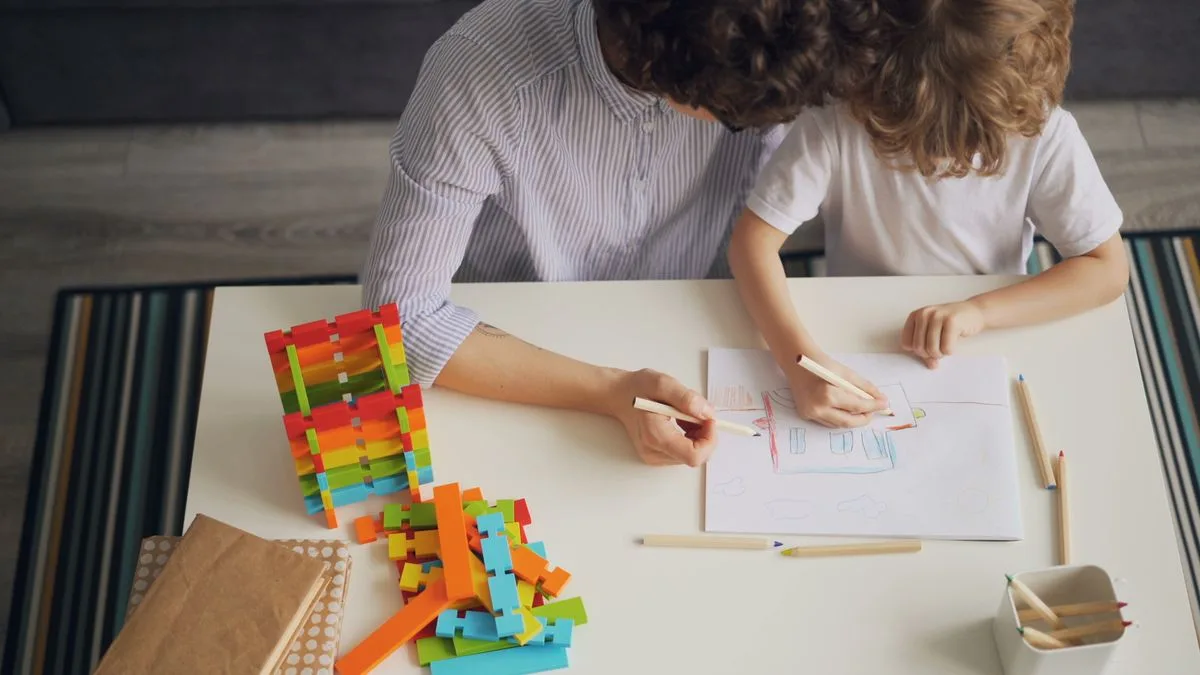
A bridge gives block building a specific puzzle: how can something cross a gap without falling through? The gap can be a strip of blue paper on the floor. Keep it small enough that the available blocks have a reasonable chance of spanning it.
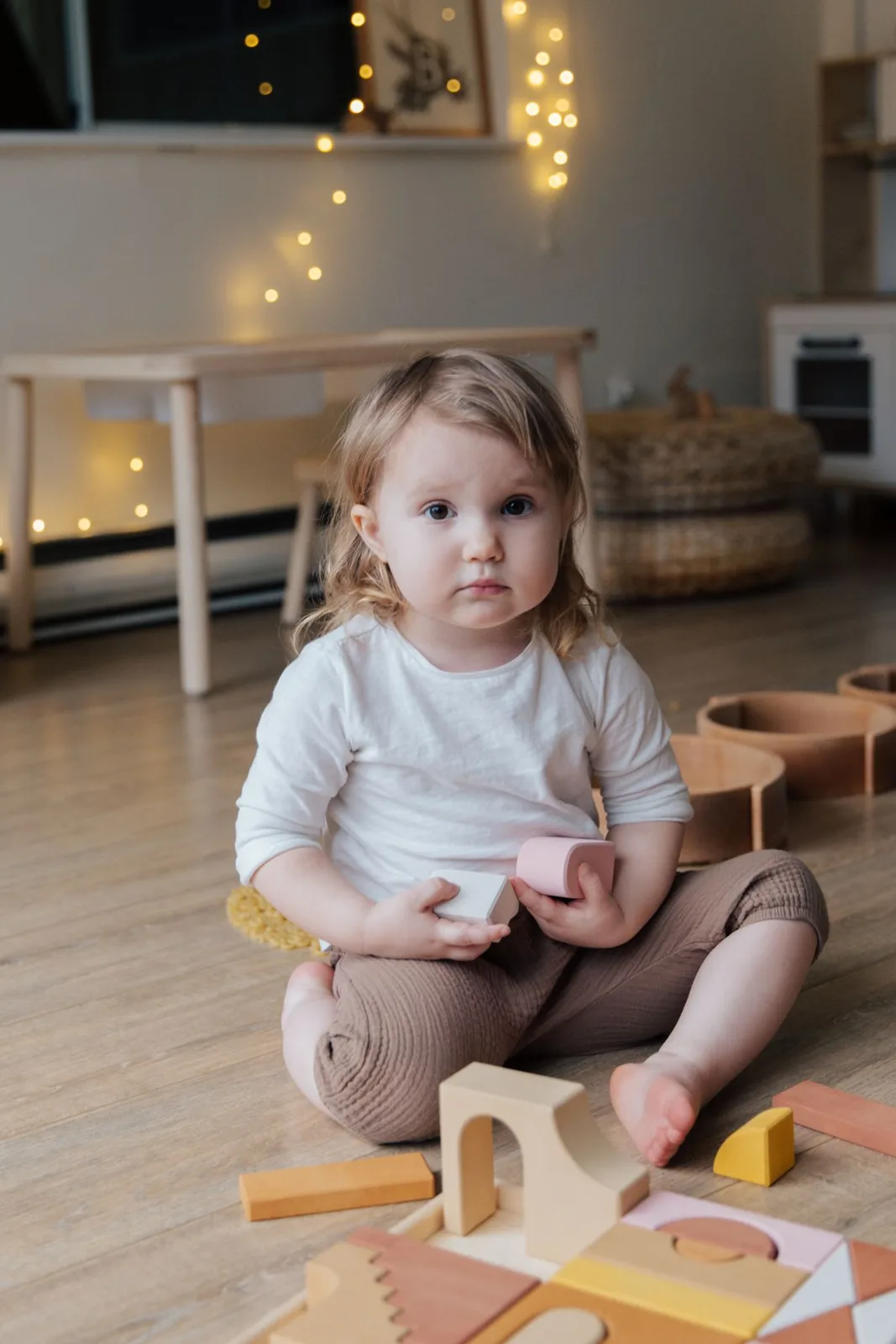
Use blocks suitable for the youngest child present and work on a level surface away from walking routes. A low bridge is easier to investigate than a high tower disguised as one.
Define the crossing
Lay down a paper river and choose a toy that needs to cross. A small vehicle or large toy animal gives the bridge a clear purpose. Check the toy fits the proposed roadway before anybody spends time building supports.
Start with a narrow river. Children can place blocks on either bank and search for a long piece that reaches between them. If the collection has no spanning piece, a broad flat board from the same building set may work. Avoid introducing heavy household objects as substitute bridge decks.
Leave room to build more than one design. Comparing two small bridges is often more useful than arguing over a single shared structure.
Let the first attempt answer a question
Ask children what they expect to happen when the toy reaches the middle. Then move it slowly across while everyone watches. If the deck tips or the supports separate, pause before rebuilding. Which part moved first?
Describe what you saw rather than declaring the design wrong: “This end lifted when the car reached here.” A child may decide to widen a support, bring the banks closer or use a different piece. Try changing one feature at a time so the effect is easier to notice.
A younger child can place the toy and watch. An older child might draw the first design and circle the part they changed. Neither needs engineering vocabulary to make a useful comparison.
Choose sensible test loads
Use the same toy for the first few tests. Once the bridge holds it, try two similar toys placed gently rather than dropped. Do not stand, sit or lean on a toy-block bridge; the challenge is for toy traffic.
If children want a strength contest, agree a stopping point before beginning. The aim can be carrying three cars rather than piling up objects until everything crashes. A tray alongside the river provides somewhere to queue the vehicles.
For siblings, alternate builder and driver roles. The driver waits until the builder says the bridge is ready, preventing accidental demolition from becoming the main activity.
Keep one useful discovery
At the end, ask which change made the biggest difference. Children can point instead of explaining. Photograph a favourite arrangement if they want to reproduce it later, then return blocks to their usual container.
Keep the paper river only if it will be used again. Another session can change the puzzle by making the crossing wider or requiring a toy boat to pass beneath, using the same familiar pieces.
Make it work for your family. Keep the useful bits and change the rest.