A geocaching-style hunt can introduce map reading and the pleasure of solving a clue without involving a hidden container. For a first attempt, make a short route to visible landmarks in a familiar public space. You can practise searching while leaving the place exactly as you found it.
If you later use an established geocaching service, check its current rules, cache details and land-access permissions. An online marker does not itself grant access to property.
Choose three permitted landmarks
Pick a short route on paths the public may use. A distinctive bench, a sign and an unusual tree visible from the path could form the stops. Avoid roadsides, water edges, unstable ground and any location requiring children to enter planting or disturb wildlife.
Walk or otherwise verify the route before using it. A landmark may have moved, a gate may be locked or a section may be closed. Follow current signs even when they conflict with your original plan.
Do not hide objects or attach clues to property without permission. This version uses things already visible; adults carry the clues and take all materials home.
Draw a map with useful information
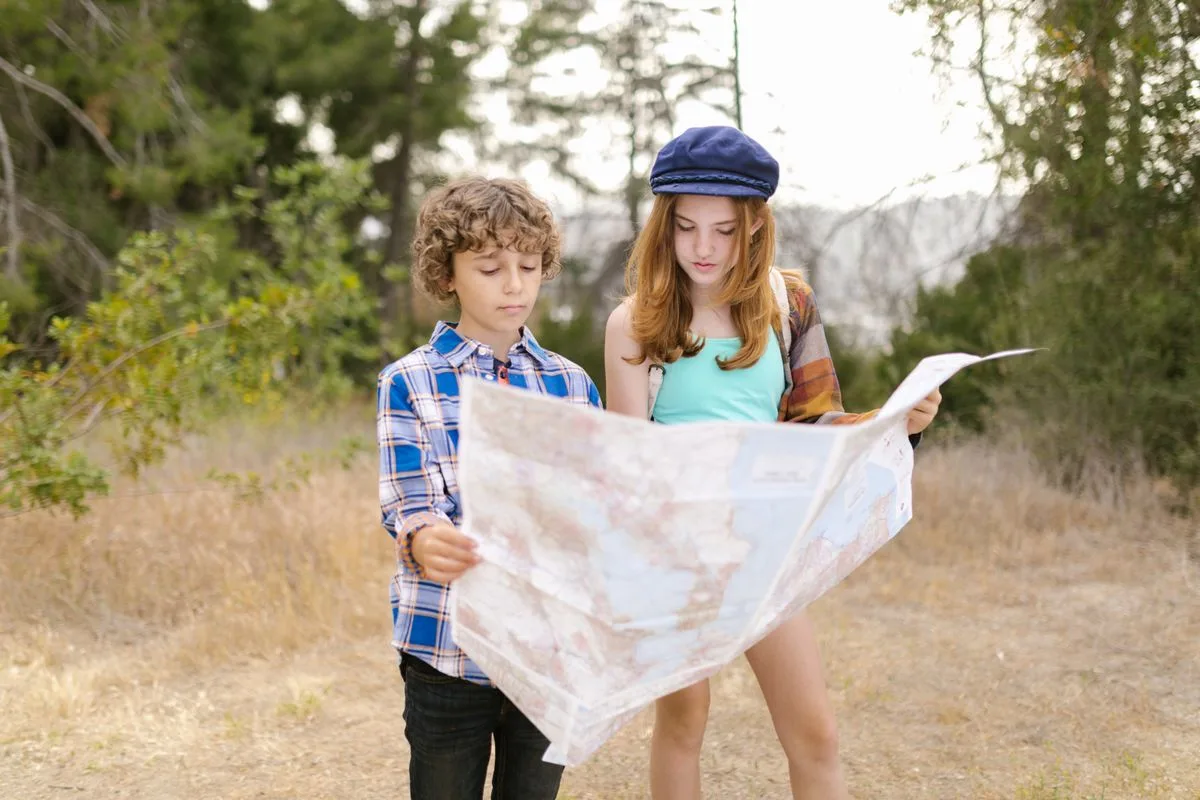
Sketch the starting point, the main path and the three stops. It need not be to scale, but make that clear. Include a recognisable turn or junction so the map helps rather than merely decorating the activity.
A younger child can match a simple drawing to the landmark. An older child might follow left and right instructions or help orient the paper against the path. Adults remain responsible for knowing the real route.
If you use a phone map, keep it as an adult navigation aid rather than giving a child a screen and asking them to chase a moving dot. Look at surroundings and access signs, not just the display.
Make clues fair and specific
Write one clue for each stop, such as “Find the seat with a curved back beside the path junction.” Avoid clues that describe several places equally well unless comparing them is part of the fun.
Give a younger child a picture and one feature to notice. Offer an older child an extra detail to work out, perhaps which side of the junction the landmark occupies. Both can search within the same supervised area.
Allow a hint without turning it into a penalty. If a clue is misleading, correct it. The child should not have to guess what an adult meant while the group waits.
Finish with the route, not a prize
At the final landmark, let children mark the completed route or draw the thing they found. A small celebratory conversation can be enough; treasure does not need to be purchased or left outdoors.
Return by the agreed permitted path and check that no paper has been dropped. Later, an interested child can design a clue for the next outing. Keep the same principles: verified access, adult navigation and a search that does not require disturbing the place.
Make it work for your family. Keep the useful bits and change the rest.