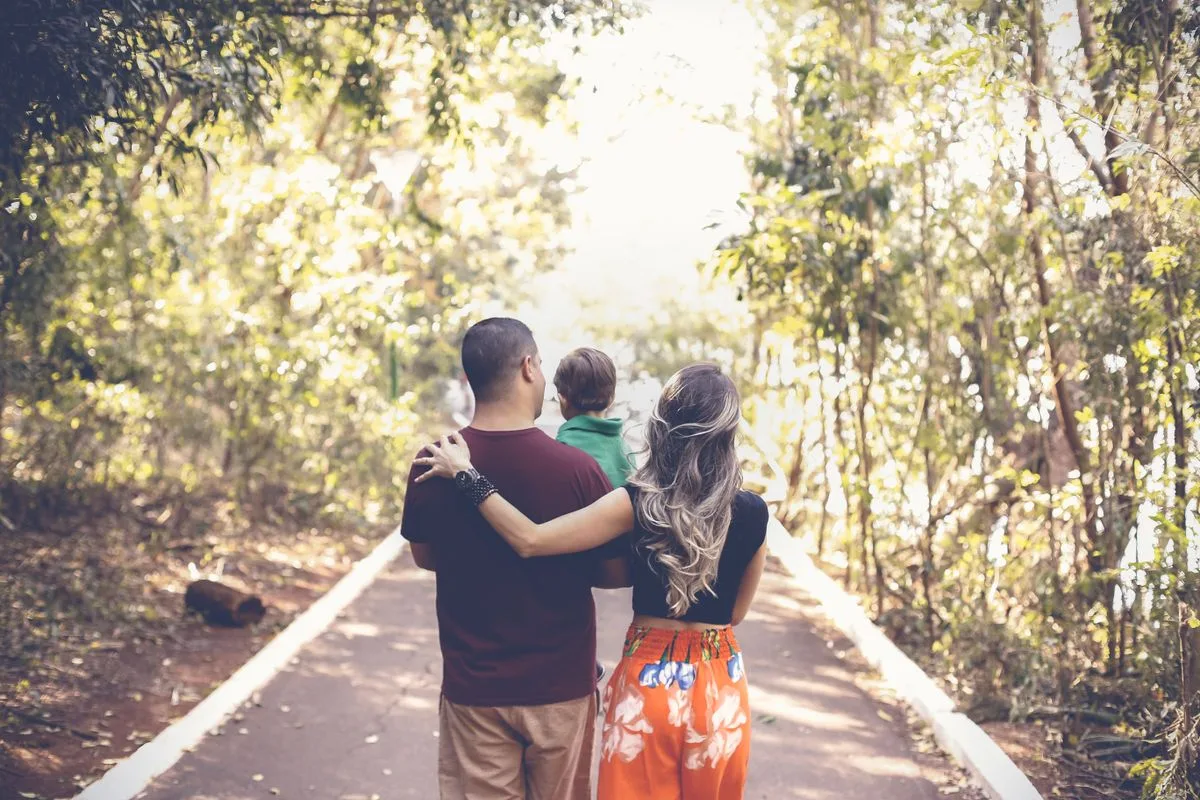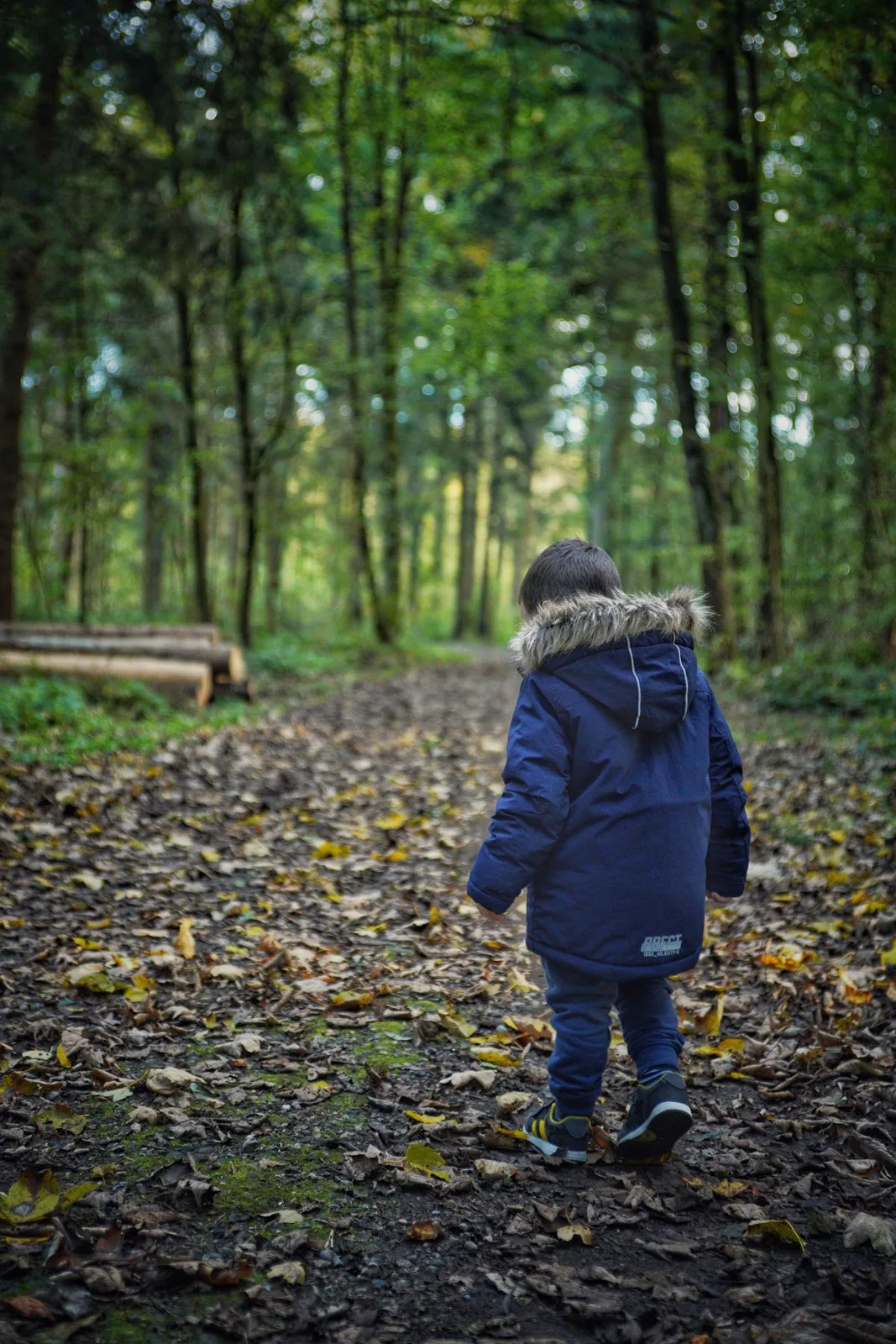
A woodland walk can be slow in a satisfying way. Bark, roots, changing light and a fallen twig may all deserve attention before the group has gone far. Plan for those stops rather than choosing a distance that only works if everyone keeps moving.
Start with an established route whose surface and length suit the family. Use the land manager's current information and follow signs or closures on the day.
Choose pauses before choosing distance
Look for a short route with places where the group can stop without blocking other walkers. A bench, a wide path junction or a designated viewpoint can provide a natural break. Check whether the route has steps, steep sections or water nearby.
An out-and-back walk gives you a simple return option, while a short loop avoids the feeling of retracing every step. Either can work. The important point is knowing how to get back before someone is too tired to continue.
Allow for toilets, food and usual rest needs. A woodland map may show a beautiful trail without showing the facilities your particular family requires.
Let looking set the pace
Offer one observation at a time. Compare two tree trunks, notice where the path becomes brighter or listen from a suitable stopping place. A younger child can point, while an older one might describe a pattern or make a quick sketch.
You do not need to identify everything. “A pale bracket-shaped fungus on that fallen trunk” is a useful observation without a guessed name. Leave unfamiliar plants and fungi alone, and do not taste anything found on the walk.
Stay on permitted routes and respect habitat protection notices. Look at fallen wood without dismantling it; it may be shelter for wildlife. If a child wants a souvenir, a drawing or description can come home instead.
Keep the group within a clear supervision arrangement. Interest in something ahead is not a reason for a child to disappear around a bend.
Turn back before the walk becomes a struggle
Agree on a simple turning point, such as a particular junction, plus a latest time to head back. Use whichever comes first. Check weather and daylight, and shorten the plan when surfaces or conditions are worse than expected.
Bring clothing and footwear suitable for the actual ground. Keep a means of contacting help and know the name of the route or access point. A charged phone is useful, but coverage should not be assumed.
Give children a transition they can understand: “One more stop at the bench, then we take this path home.” On the return, let an older child spot familiar landmarks while an adult remains responsible for navigation.
At home, ask which stopping place they liked. That may matter more than how far you walked. Repeating a short route can reveal different details through the seasons without requiring a longer walk each time.
Make it work for your family. Keep the useful bits and change the rest.