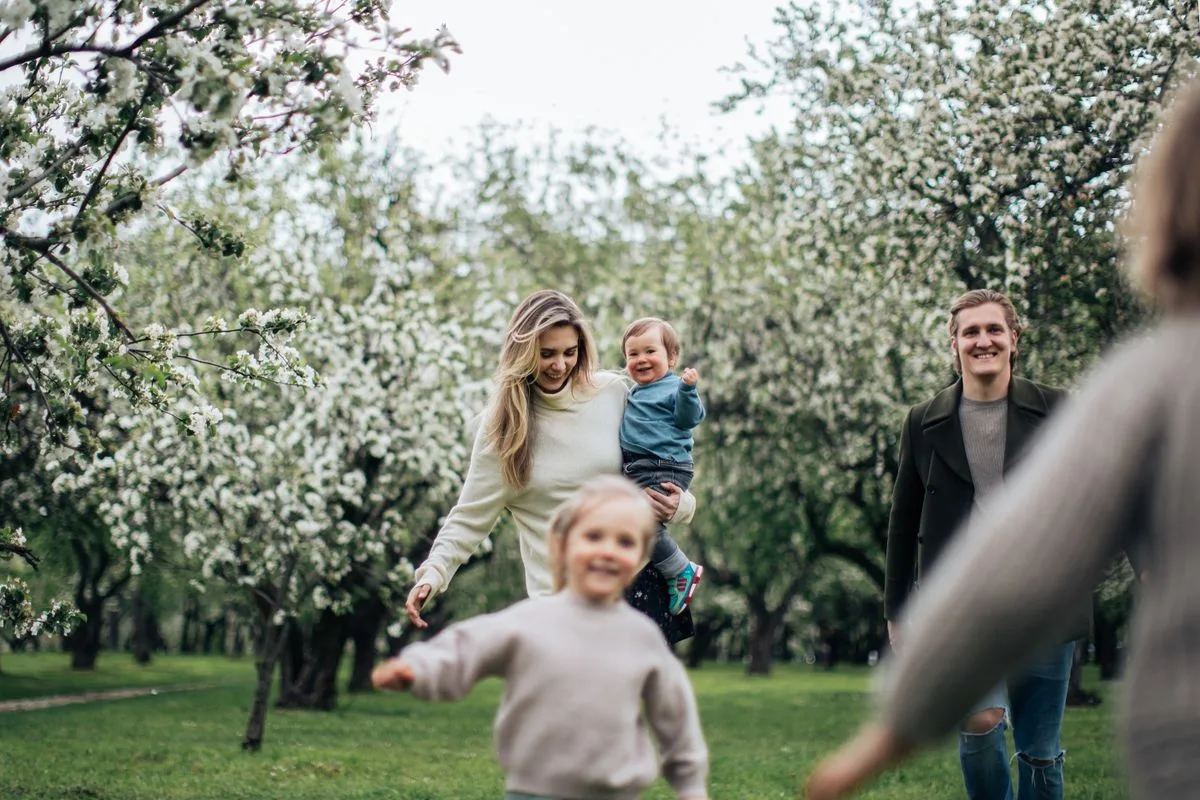
Spring blossom can turn an ordinary route into something worth looking at again. You do not need to travel to a famous display. A tree visible from the pavement or a group in a local park may offer enough for a short family walk.
Treat blossom as something to look for rather than a guaranteed attraction. Timing varies with the tree, place and weather, so a previous year's photograph cannot promise what will be there today.
Choose a familiar accessible route
Start with a route the family can comfortably manage and keep a shorter return option. Use public paths and permitted spaces. Do not enter a private garden or lean over a boundary to reach a branch.
Check road crossings, surfaces and any local closures as you normally would. A beautiful tree beside a busy road may be best viewed from farther away, without stopping the group where there is little space.
Explain the purpose simply: “We are going to see what is changing on this street.” That leaves room for buds, new leaves or another discovery if the expected flowers have gone.
Compare two views without picking
Look at a tree from a suitable distance first. Notice the overall shape and whether flowers appear all over it or in separate patches. Then find a detail visible from the path, leaving branches and petals undisturbed.
A younger child might point to the brightest part. An older child could compare flower and leaf shapes on two different trees. Do not assume every pink-flowered tree is the same species.
If someone wants a name, use an appropriate identification source later and keep uncertain conclusions tentative. Describing the visible features is useful even when the group never identifies the tree.
Give the walk one small challenge
Ask children to notice three stages of spring: a closed bud, an open flower and a new leaf, if those can be seen safely from the route. Drop any part that is not available rather than searching every side street.
Another option is to compare colours. “White” blossom may look cream, pink or grey in different light. Children can choose words, make a quick sketch at a suitable stopping place or simply describe the view.
Keep observation separate from crossing roads. Adults manage the route, and cameras or games pause wherever attention is needed for moving safely.
Return to the same view later
Choose one landmark to remember, such as a tree beside a particular public bench. Note the date if children want to follow the change. A simple drawing can mark what the tree looked like without creating another craft project.
On a later walk, compare what is actually there: more open flowers, fallen petals, fuller leaves or bare branches after a change in weather. Avoid presenting change as a timetable the tree must follow.
The walk ends with an ordinary return home. Its interest comes from noticing a local place more carefully, so the next visit can be just as short and need no additional equipment.
Make it work for your family. Keep the useful bits and change the rest.