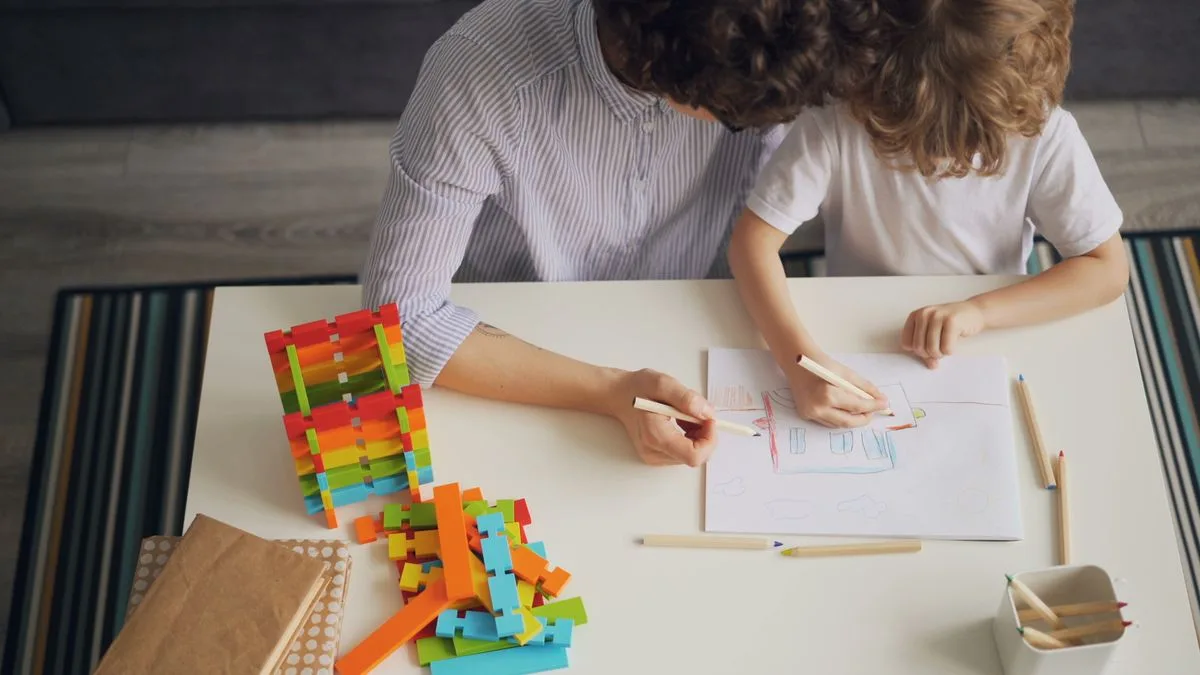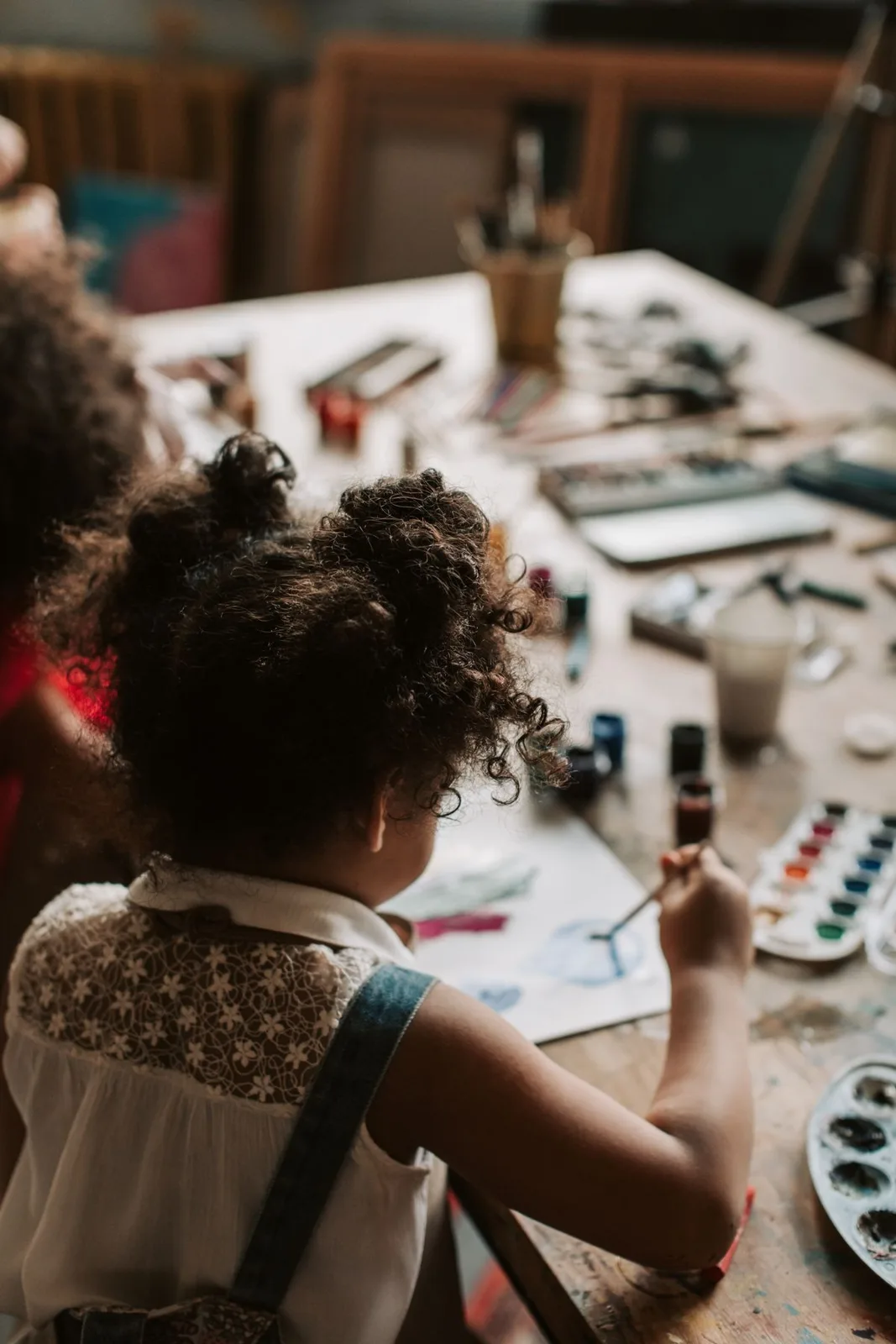
Watercolours suit a shared table because children can use the same materials for very different pictures. One may enjoy spreading colour across wet paper while another paints the windows of an imaginary house. A manageable session begins with separate working spaces and a small choice of colours.
Choose age-appropriate paints and follow their instructions. Keep painting water separate from drinking water, and help younger children handle brushes and pots.
Set out one place per painter
Protect the table with a suitable wipe-clean covering. Give each child a sheet of sturdy paper, a brush and a low, stable water pot containing only a little water. Put pots within easy reach so nobody needs to stretch across another picture.
A shared palette can work between two children, but separate palettes reduce waiting if both are enthusiastic. Start with three colours rather than opening every paint available. Keep a cloth beside each place for wiping excess water and dealing with drips promptly.
Test the paper with one wet brush stroke before the session. Very thin paper may wrinkle or tear quickly; smaller pieces can be easier to handle if that is what you have.
Demonstrate a useful brush routine
Show the sequence once: wet the brush, touch the paint, make a mark, then rinse before changing colour. Do this on your own scrap of paper rather than improving the child's picture. A cloudy water pot can be replaced when it stops being useful.
Younger children may want to practise large strokes without making an object. Offer a wide brush and let the marks stand. Older children can try painting one shape beside another after the first has dried, noticing how the edges behave differently.
If colours become muddy, offer fresh water and a clean area of palette. There is no need to discard the picture. Brown can become a path, a creature or simply part of the experiment.
Offer a shared subject with room inside it
Try “somewhere with water” rather than asking everyone to paint the same boat. A toddler's blue patch, a pond with reeds and a detailed seaside scene can all answer that invitation. Children who dislike a suggested subject can paint something else.
Offer a different challenge at each place
For an older child seeking a challenge, suggest mixing two greens or leaving a small patch of white paper for a window. For a younger child, ask whether they want a new sheet when the current one becomes very wet.
Keep extra materials out of reach until needed. Adding glue and paper pieces halfway through makes drying and tidying much more complicated.
Make a drying place before finishing
Reserve a flat surface that will stay undisturbed. Carry paintings there on a tray or firm piece of card if they are floppy. Leave space between sheets so wet edges do not stick together.
Rinse brushes according to their instructions and return paints when dry enough to store. Invite children to put dry supplies away while an adult handles spills. Tomorrow, the painters can decide which pictures to keep, reuse or continue.
Make it work for your family. Keep the useful bits and change the rest.