A different playground can refresh a familiar Saturday routine without requiring tickets or a full day away. The novelty might be a new arrangement of slides, a quieter corner or simply approaching the park from another direction.
Choose somewhere within a manageable journey and keep the first visit short. A playground that looks exciting in a photograph still needs to suit the children who are coming.
Compare practical details before equipment
Check the council's or land manager's current information about location, access, closures and any age guidance. Look for toilets, nearby roads, the arrival route and whether the play area is enclosed if that matters to your family.
Consider who needs to travel and carry things. A long walk with a tired toddler may outweigh the attraction of an unusual climbing frame. Pick a second option close to home in case the chosen site is closed or unsuitable.
Tell children that you are going to look and try what is appropriate. Avoid promising a particular piece of equipment before seeing its condition and instructions.
Take a slow first look
On arrival, walk around together before anyone rushes to the tallest structure. Read signs and check the surfaces and equipment for obvious damage or unsuitable conditions. Use equipment within its stated guidance and your child's abilities, with appropriate supervision.
Agree on the play boundaries and which adult is supervising each child. A fence does not remove the need to watch, and a busy open area may need a different arrangement from your usual park.
Let a hesitant child begin with a familiar activity. Watching others or walking around the edge is a valid start. The visit does not require trying every new feature.
Give different ages room within the plan
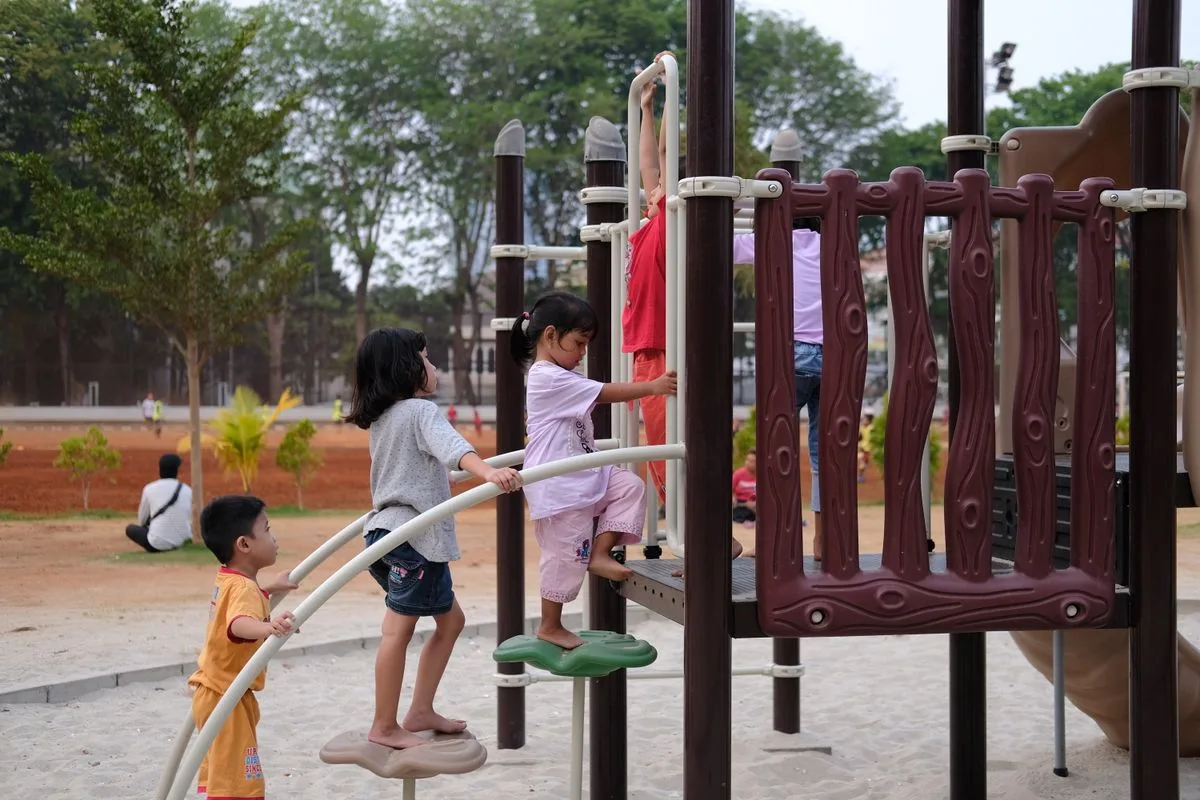
Younger children may want repeated turns on one small slide, while older children explore a sequence of equipment. Position adults so both are supervised; if that is not workable, use suitable areas together in turns.
Do not ask an older sibling to manage lifting, pushing or catching a younger child. Shared play is optional and adult responsibilities stay clear.
If equipment is busy, help children notice who is waiting and choose a simple turn-taking arrangement. Move to another activity when queues become the main feature of the visit.
Finish with a recognisable transition
Give advance notice and name the final activity: one last slide, then shoes checked and the walk back. Avoid an open-ended “last go” that changes whenever another interesting thing appears.
Leave enough time for the return journey and any planned meal. A new playground is still enjoyable when the family leaves before every child is exhausted.
Remember what suited this family
At home, note practical details that were difficult to find beforehand: the entrance used, whether the short path worked and which areas suited different ages. Check current conditions again before returning.
Ask children which playground they would choose next time. They may prefer the familiar one, and the experiment has still been useful. Variety can remain an occasional option rather than a requirement to keep finding somewhere better.
Make it work for your family. Keep the useful bits and change the rest.