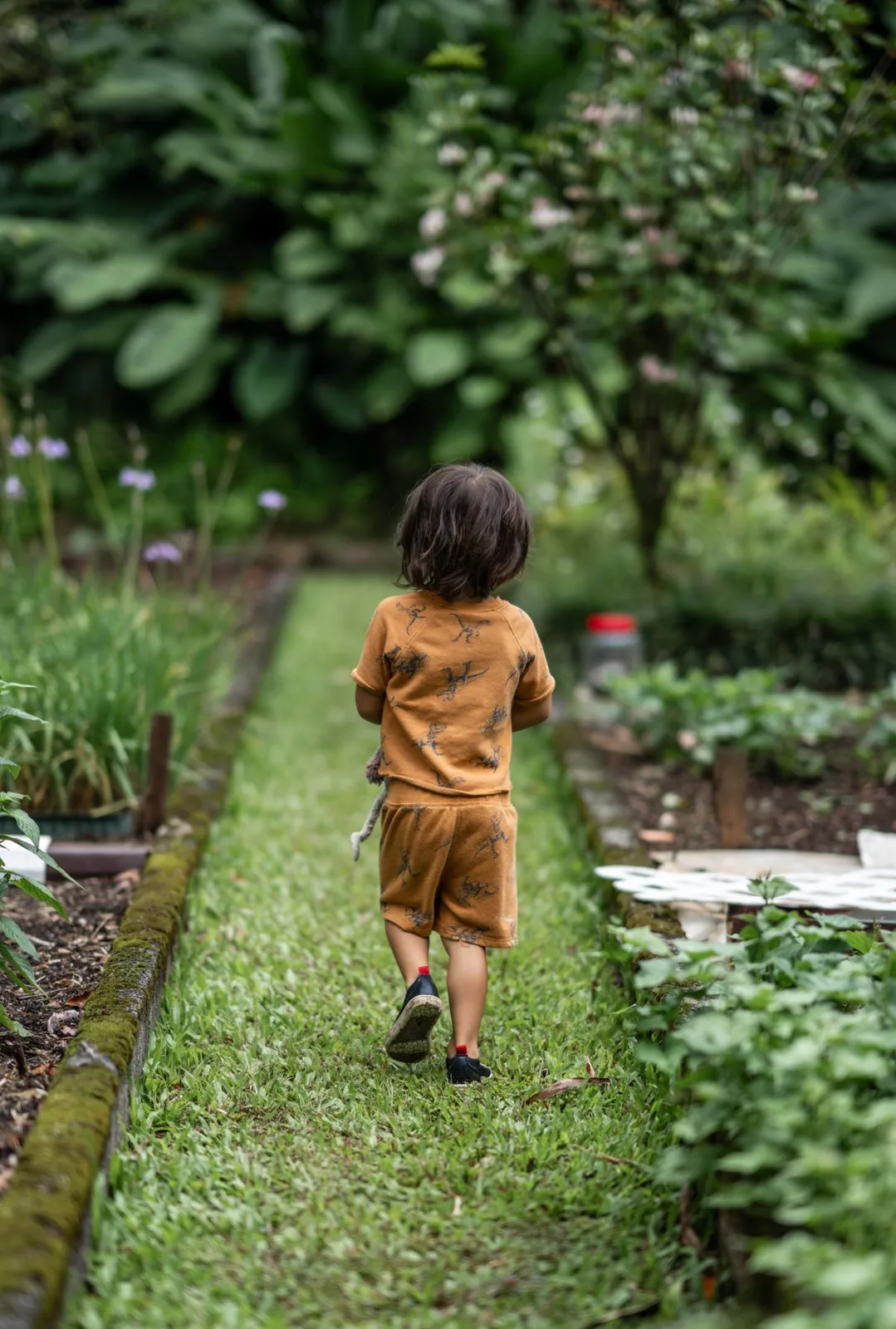
Children do not need to know plant names to enjoy a garden. A huge leaf, a winding path or the difference between two shades of green can be enough to begin. Choose a short area to explore rather than treating the whole garden as a collection to complete.
Check the garden's current opening arrangements, admission charges, facilities and access details before you go. The features visible in summer photographs may look different in another season.
Find a small route with variety
Use the garden's own map to choose a manageable loop or an easy return path. Look for a mix of open space, planting and places to pause. Check steps, water features and any restricted areas that affect supervision.
Ask staff about suitable family routes if information is unclear. A beautiful path may be steep or narrow, while a simpler one could give the group more time to look comfortably.
Explain that this is a place to observe and follow local rules. Children should not pick flowers, taste plants or enter beds. Avoid touching unfamiliar plants, and use any designated sensory features according to their instructions.
Look for shapes before names
Offer a challenge such as finding a leaf bigger than your hand or comparing a rounded shrub with a tall narrow one. Look from the path and leave the plant undisturbed. A younger child can point while an older one describes the edges or texture they can see.
If labels are available, read one that relates to the child's question. There is no need to turn the visit into learning every Latin name. When identification is uncertain, describe the feature and leave the name open.
Let the season supply the subject
In spring, look for new growth and different stages of buds from suitable paths. Summer may offer shade patterns; autumn might reveal contrasting colours; winter can make branch shapes easier to see.
Avoid promising specific flowers before checking what is currently visible. A garden without the expected display still contains structure, signs and seasonal changes to investigate.
Pause without making another task
Choose an appropriate bench or open stopping place. Let children look quietly, talk or make a quick drawing if they want to. Keep voices and movement considerate of other visitors.
Do not make the youngest child wait through a long adult photography session. If someone wants a detailed look at one section, arrange supervision and timing clearly rather than assuming the rest of the group will remain interested.
Take one question home
Before leaving, ask what caught each person's attention. An older child could note a label to investigate later, while a younger child might remember the biggest leaf.
Keep any picture or note simple enough to use. A future visit can return to the same spot to see what changed, subject to current access. The garden does not need a fresh activity pack each time; its own growth and the child's changing interests provide plenty to notice.
Make it work for your family. Keep the useful bits and change the rest.