Choosing books can be the final part of a library visit rather than the only purpose. Looking at an unfamiliar shelf, sharing a picture book and discovering how to request something can make the visit worthwhile, even when nobody borrows a tall stack.
Check the library's current opening hours and arrangements for joining, borrowing or attending activities. Local services differ, so avoid promising a session simply because another branch offers one.
Give the visit a small starting point
Ask each child what they are curious about today. A younger child might want a book about buses; an older one might be looking for instructions for drawing animals. Begin in that area instead of asking them to choose from the entire building.
If you cannot locate something, ask a member of staff when they are available. Let the child hear the question and see how an adult finds help. A confident reader may want to ask independently, while another child prefers you to speak.
Explain the library's expectations in practical language: use indoor voices, walk between shelves and return books according to the branch's system. Check whether books you have looked at belong on a trolley rather than trying to shelve them yourself.
Leave room to browse beyond the original subject. A child who came for a dinosaur book may become interested in a comic or an illustrated history. The initial topic is a way in, not a requirement to fulfil.
Spend some time with a book there
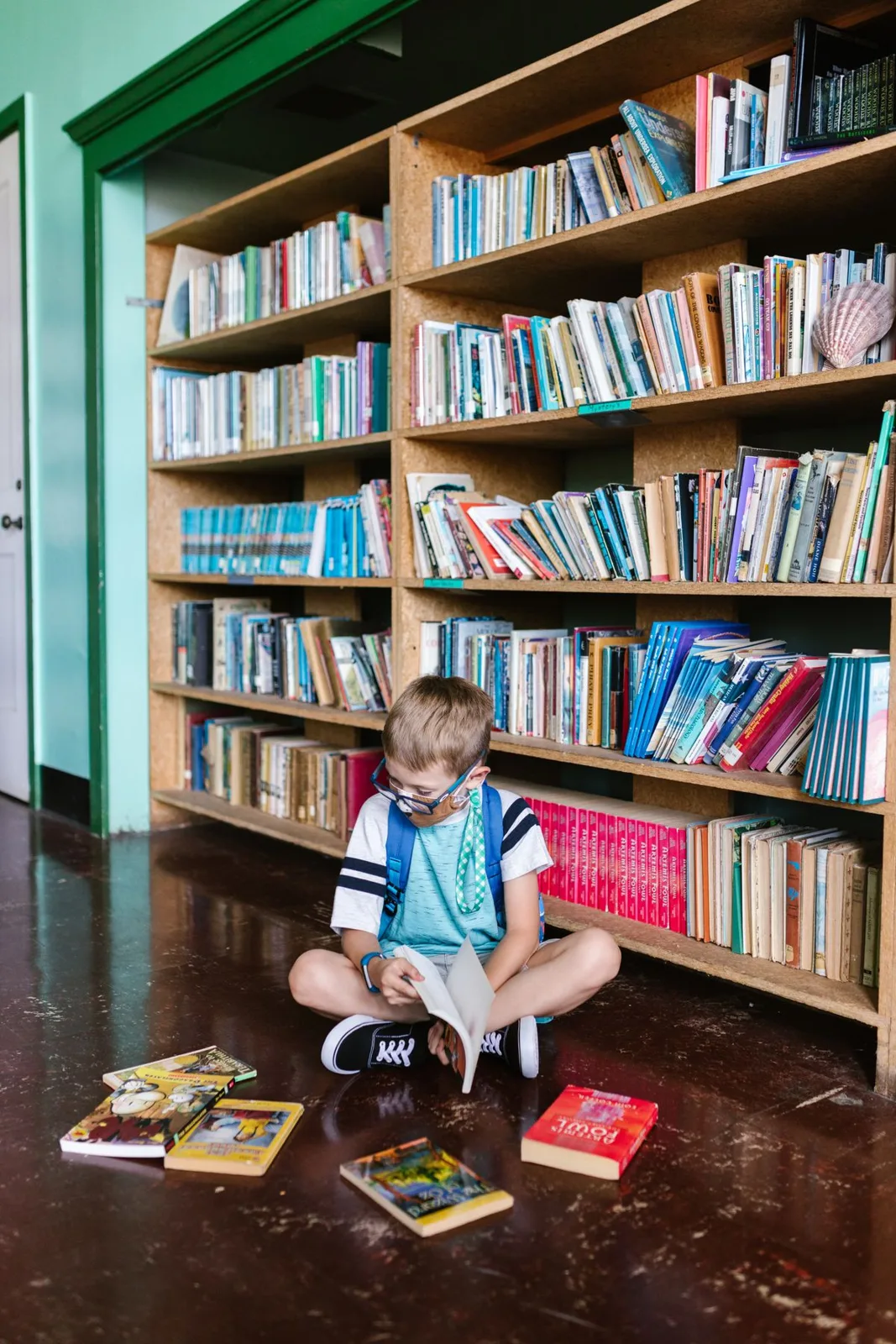
Choose a suitable place to sit if one is available. Share a few pages, look closely at a diagram or let the child show you a favourite illustration. Reading the entire book is optional; so is continuing one that does not catch their interest.
For mixed ages, take turns choosing a short piece to share. An older child can browse nearby within the supervision arrangement you have agreed, without being made responsible for entertaining a sibling.
Try one different format occasionally. A graphic novel, poetry collection or factual picture book may offer a new route into reading. Check suitability for the individual child rather than assuming a shelf label answers every question.
If you want to explore a catalogue terminal or other service, ask about its use. Keep account details private, and explain that reserving something may involve rules or charges that need an adult check.
Borrow an amount you can manage
Before checking out, look at what is already at home and how much the family can reasonably keep track of. One well-chosen book is a complete library visit. A large pile is useful only if the household can store and return it.
Confirm due dates through the library's system and place borrowed items in a dedicated bag or shelf at home. If a child decides a book is unsuitable after trying it, returning it is part of using the library.
Finish by asking what they would like to investigate next time. Keep the answer as an idea, not a promise about stock. A repeat visit can begin with the child's curiosity rather than another instruction to find something to read.
Make it work for your family. Keep the useful bits and change the rest.