Getting dressed involves several separate jobs: finding clothes, choosing them, turning them the right way round and managing fastenings. A small corner can remove some of the searching, leaving the child to practise the parts they are ready to try.
Start with furniture and storage you already have. The aim is a usable arrangement at the child's height, with adult help close by, rather than a miniature dressing room.
Put the clothes within a sensible reach
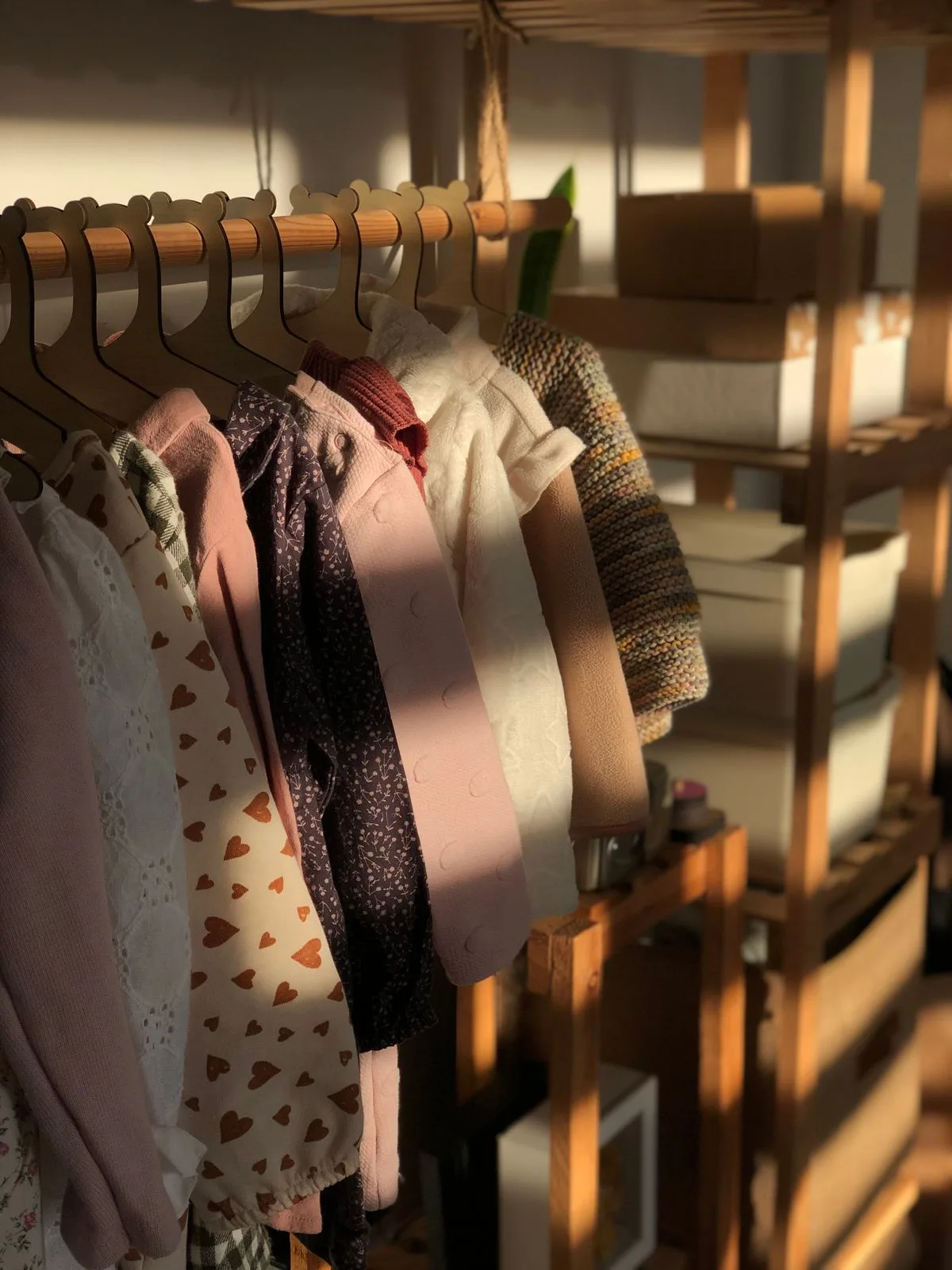
Choose a low drawer, open basket or suitable shelf for the next outfit. Keep it away from hot surfaces and routes through the room. Do not create a reason for children to climb furniture, and follow furniture fixing instructions where relevant.
Put out clothes that suit the weather and the day's plans. Two complete options are usually easier to understand than an overflowing wardrobe. A younger child might select a T-shirt while an adult chooses the other necessary layers.
Use a separate place for clothes that are still being worn. Without that distinction, yesterday's jumper and tomorrow's clean outfit can become one pile before breakfast.
Leave space for the body work
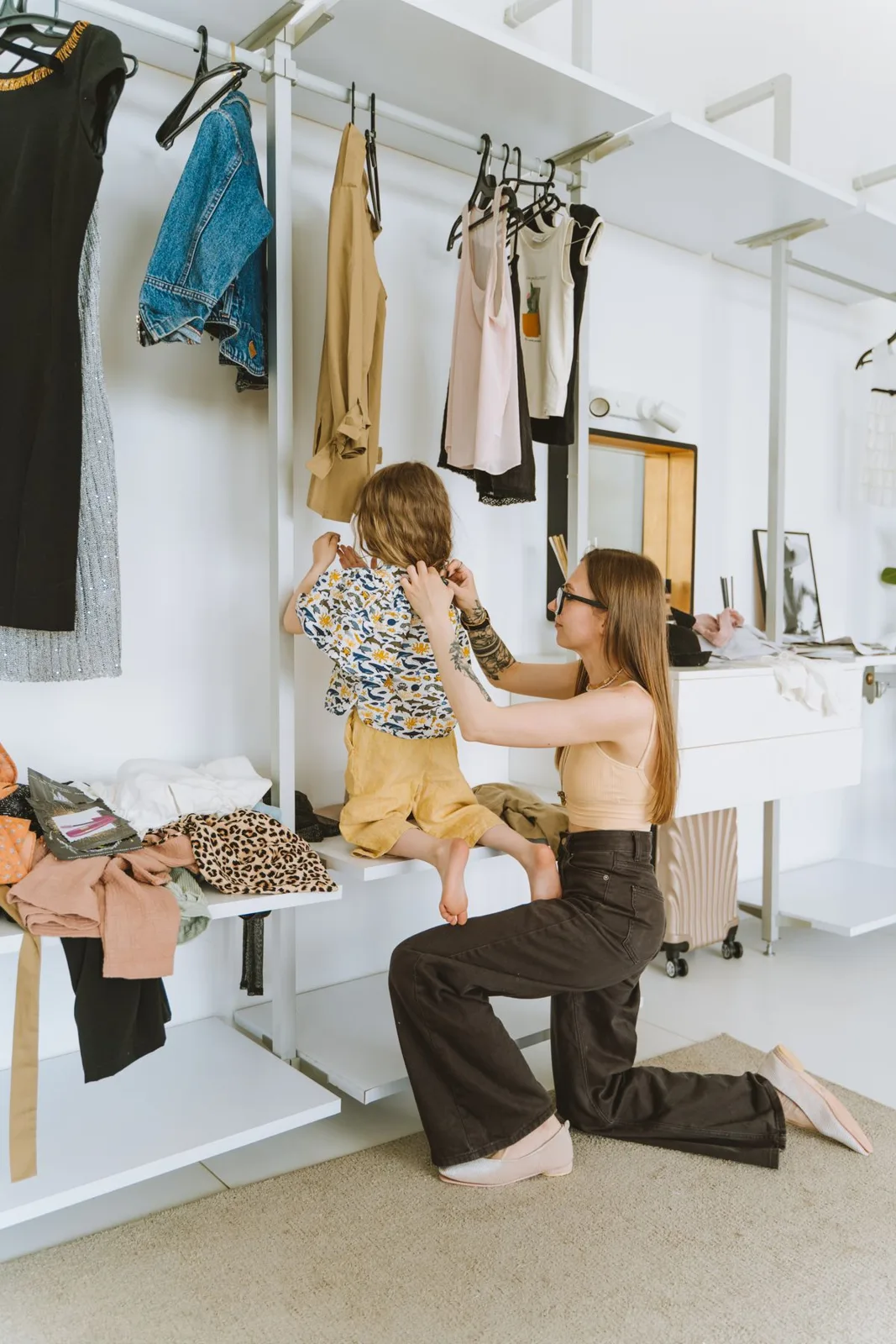
Provide a stable place to sit for putting on socks or trousers if that helps. The child needs room to bend, turn and lay something down. Move toys and loose bags from the immediate floor area.
Show one useful detail at a time. Point out the label at the back of a top or place trousers with the waistband nearest the child. Avoid giving a long list of instructions while they are already wrestling with a sleeve.
If a garment is frustrating, check the garment as well as the technique. Narrow openings, stiff buttons and twisted lining can make a simple-looking item difficult. Keep easier clothing available on mornings when time is short.
For children with different physical or sensory needs, follow the approaches and clothing adaptations that work for them. Independence may mean choosing the outfit or doing one part with assistance.
Separate practice from the deadline
Try a difficult zip or button during a relaxed moment, using the real coat or cardigan. An adult can start the fastening and let the child finish the final movement. Ask before stepping in so help does not become a sudden takeover.
On a busy school morning, say which parts you will help with: “You put your arms in; I will start the zip.” That gives the child a clear role without making getting out of the door depend on mastering a new skill.
An older sibling may demonstrate if both children want that, but should not become responsible for another child's dressing.
Reset one outfit at a time
Return unused choices to their proper place and put dirty clothes in the agreed laundry basket. Refill the corner when you are already sorting clothes, rather than adding a separate elaborate evening task.
Watch which step still causes difficulty. If the child dresses happily but cannot find socks, give socks a clearer home. If choosing takes too long, reduce the options. Keep the arrangement small enough that the child can understand it and the adult can maintain it on an ordinary busy day.
Make it work for your family. Keep the useful bits and change the rest.