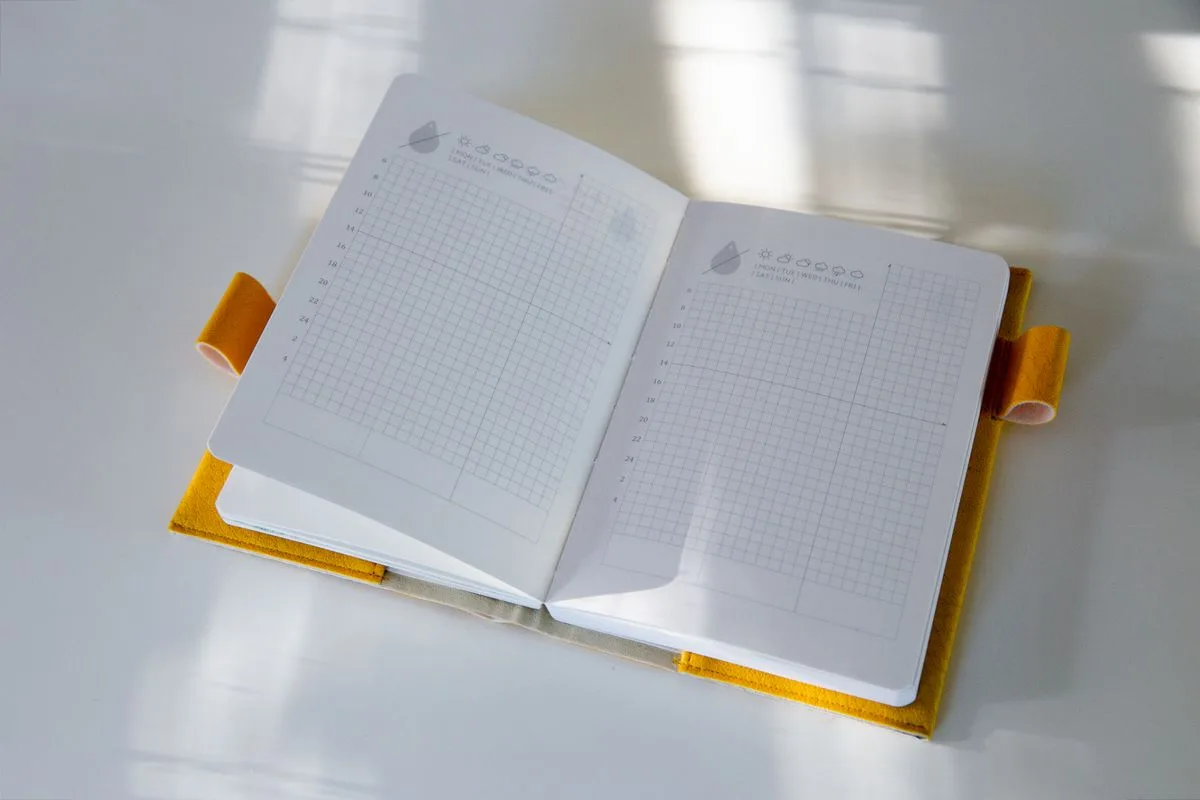
A planning notebook becomes less useful when every page contains unfinished lists with no clear connection to the current week. The answer is not necessarily a more detailed system. A few visible boundaries can make an ordinary notebook easier to return to after a busy spell.
Use something you already own, with pages large enough to read comfortably. Keep a pen with it and choose a place where the adults who use it can actually find it.
Give the current week one clear page
Write the dates at the top. Add appointments or actions that change family arrangements, then leave room for notes that arrive during the week.
Keep the entries concrete: “Return trip form by Tuesday” or “Check spare shoes fit”. A vague line such as “School” does not explain the next action.
If you already use a calendar, let it hold the times. The notebook can hold preparation and decisions. Copying every event into both places creates extra maintenance and more opportunities for versions to disagree.
Use a bookmark or folded corner to identify the active page. Nobody should need to read the previous month to find tomorrow's job.
Separate actions from ideas
Keep an “Another time” page for possibilities: a rainy-day project, a cupboard you might sort or an outing to investigate. These are not commitments simply because you have written them down.
On the current page, include tasks someone has agreed to do. Add a name where adults share responsibility, and a date only when timing matters.
For an unresolved item, write the question that needs answering. “Who can collect on Friday?” is more useful than an unexplained question mark beside a date.
Children can contribute an idea or draw a reminder, but adults should check arrangements and deadlines that remain their responsibility.
Make entries easy to close
Choose a small mark for completed tasks and use it consistently. Cross out a cancelled job rather than leaving it open indefinitely.
Break a large task into its next useful action. “Organise holiday” may remain untouched; “Check available dates with the relative we want to visit” tells someone what to do next.
Avoid decorating or rewriting pages for appearance unless you enjoy it and have time. A planning notebook can be untidy and still be understandable.
If one person regularly has to interpret everybody else's abbreviations, agree clearer wording. Shared use depends on legibility as much as enthusiasm.
Reset after a gap without copying everything
When the notebook has been unused for a while, start a new dated page. Review old unfinished items and carry forward only the ones that still matter.
Discard outdated plans and questions already resolved elsewhere. Do not create a fresh list of obligations simply to preserve the old one.
Choose a brief weekly check at a moment that fits your household. Look ahead, settle any shared decisions and identify the first action for larger jobs.
Leave the notebook open to the current page when appropriate, or return the bookmark to it. The system works when it helps an adult find a useful next step, including after an imperfect week.
Make it work for your family. Keep the useful bits and change the rest.