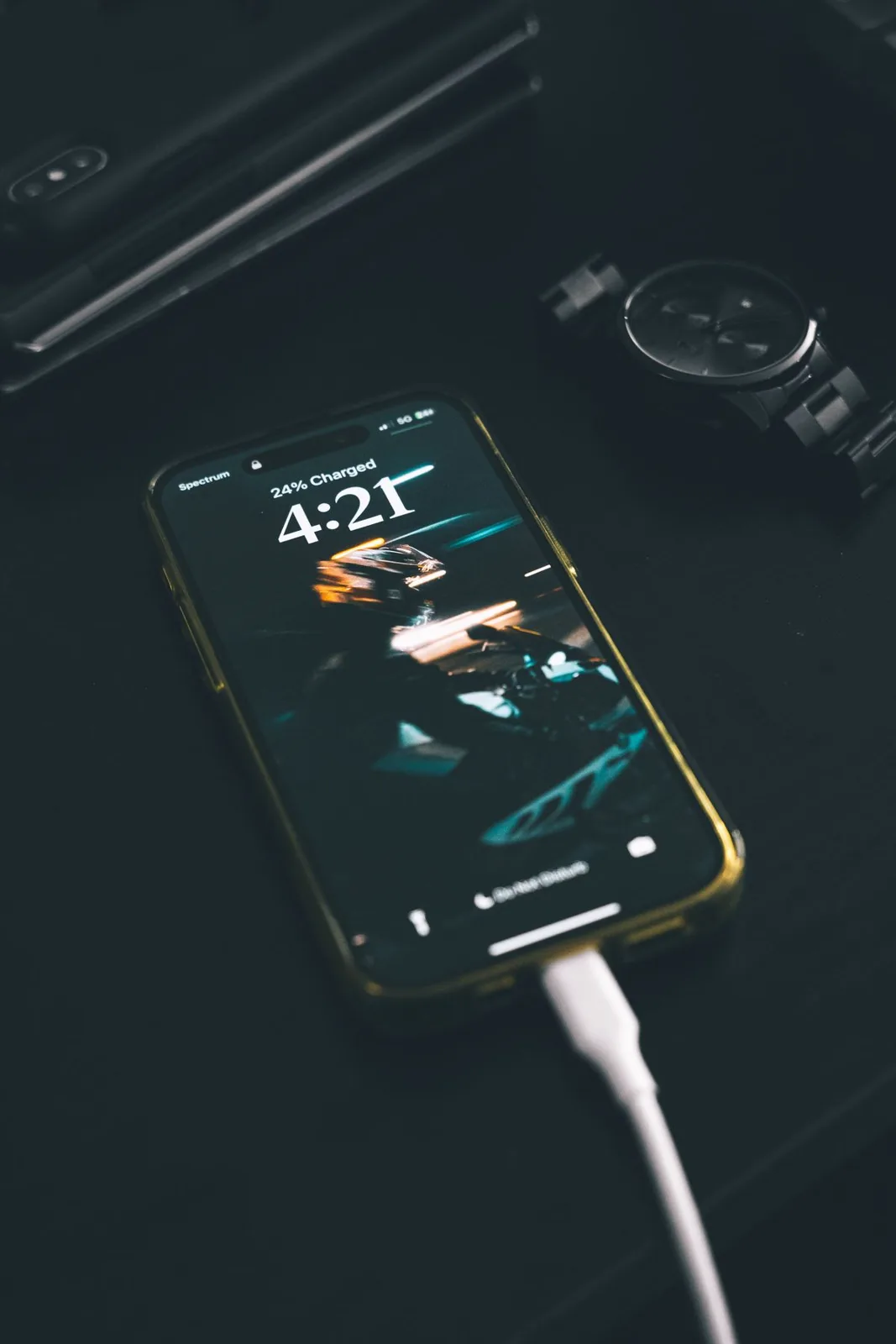
A phone on the dinner table can begin as a practical object: someone is expecting a message, checking a timetable or finding a photograph. A charging place elsewhere gives devices a predictable home and makes a mealtime agreement easier to carry out.
Choose the agreement as well as the location. Moving a cable will not clarify whether a work call is expected or who needs access to an important message.
Find a suitable powered space
Choose a dry, ventilated place with a stable surface, following the device and charger manufacturers' instructions. Keep chargers away from water, heat and materials that could cover a charging device. Do not charge on a bed or beneath cushions. Read the London Fire Brigade guidance on batteries and chargers when choosing the arrangement.
Arrange cables so they do not cross a walkway or hang where a young child can pull them. Keep damaged chargers out of use and use compatible equipment. An adult should manage plugs and electrical connections.
A shelf near an existing socket may be enough. Do not add extension leads or stack devices simply to make a decorative station. The number of available safe charging positions should guide how many devices use it at once.
A small label can distinguish similar phones or tablets. Keep the surface clear enough that a person can put a device down without moving a pile of papers. Store spare cables separately so the station does not become a drawer emptied onto a shelf.
Check whether the location is useful for everyone who needs it. A high shelf may protect cables from toddlers while requiring an adult to put a child's device away. That can be an appropriate arrangement; children do not need independent access to every charger.
If adults work different hours, agree which devices must remain available and where those will sit. Practical exceptions work better when people know about them in advance.
Make the mealtime agreement specific
Try a simple statement such as: “Devices go on the shelf while we eat. If someone is waiting for an important call, they tell us first.” Decide how to handle that call, perhaps by stepping away from the table when possible.
Include adult devices in the conversation. Children will notice if the rule applies only to them. At the same time, avoid suggesting that every household needs the same arrangement or that any interruption ruins a meal.
For younger children, the routine can be visible: an adult puts their phone away before bringing plates. Older children can help choose the reminder, provided the adults keep responsibility for the agreement.
Review the awkward moments
If devices return to the table because tomorrow's calendar is on a phone, check it before sitting down or choose a short agreed moment to look together. If someone needs accessibility support from a device, plan around that actual need.
After a few meals, adjust the location or wording that is getting in the way. Keep the charging shelf clear during the household's usual tidy. Its usefulness comes from being a reliable place and a shared habit, rather than an impressive collection of accessories.
Make it work for your family. Keep the useful bits and change the rest.